
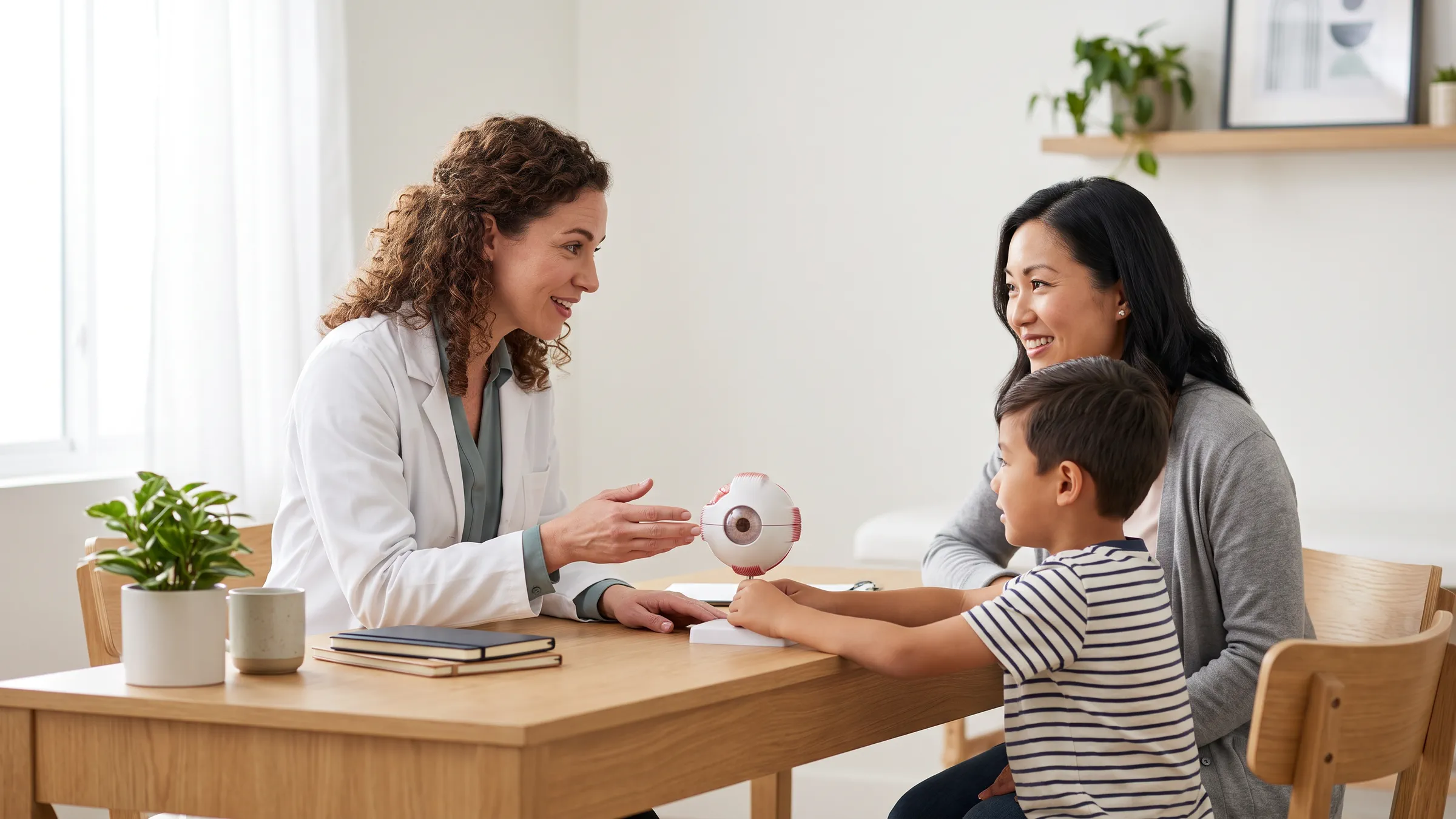
Myopia control aims to slow how fast nearsightedness gets worse. A new prescription clears blur, but that is a different goal. There are several choices. None is best for every child.
Start with the eye exam, old prescriptions and eye measurements. Then compare daily care, risks, costs and follow-up.

sleepSEE uses custom Ortho-K lenses worn at night. Myopia-control glasses, such as ZEISS or Stellest, soft daytime contacts, such as MiSight, and atropine drops are outside the sleepSEE program. This guide explains those choices so you can learn how they differ.
A Head-to-Head Comparison of Your Options
| Choice | Routine | Main question |
|---|---|---|
| Ortho-K | Lenses during sleep, removed for the day | Do the fit and care plan suit the child? |
| Atropine | Prescription drops | Which dose and formulation, with what evidence? |
| Myopia-control soft contacts | Specific designs worn as prescribed | Can the child manage wear and care safely? |
| Myopia-control glasses | Specific spectacle designs | Does the design fit the child's needs and evidence? |
| Outdoor time | Healthy daily habit | How can it support the plan without replacing treatment? |
1. sleepSEE Orthokeratology (Ortho-K)
Fitted lenses change the cornea's shape during sleep. The cornea is the clear front of the eye. The goal is clear daytime vision without daytime glasses or contacts.
Ortho-K also changes light focus across the retina. This is thought to help slow eye growth. Studies support its use in children, but the response varies.
The effect on vision is temporary and needs ongoing wear. Clean the lenses and keep eye checks. Risks include serious infection. Read the Ortho-K and atropine comparison.
2. Low-Dose Atropine Eye Drops
Atropine is a medicine used in selected myopia plans. Results and side effects differ by dose and child. Ask the doctor which drops are planned, what studies show and what the label says.
The drops do not replace needed glasses or contacts. Some children have light sensitivity or near blur. Follow-up checks the response and any symptoms.
Drops used to slow myopia do not replace the glasses or contacts needed to see clearly. Ask about both parts of the plan: what helps your child see today, and what aims to slow change over time. Different drop strengths and study groups can have different results; one headline percentage does not apply to every prescription.
3. Multifocal Soft Contact Lenses
Certain soft-lens designs use more than one focusing zone to help slow myopia. Ordinary soft contacts do not have the same purpose. Ask about the exact design and its age and prescription limits.
Follow its wear, replacement and care instructions. Some designs are daily disposables; other routines differ. Keep lenses away from water and use backup correction when advised.
4. Increased Outdoor Time
Outdoor time can lower the chance that myopia starts. Evidence for slowing it after onset is less clear. It is a healthy habit, not a substitute for needed treatment.

Discuss a daily outdoor goal with your doctor, alongside sun protection and regular breaks from close work. Read the IMI review of light and myopia with your doctor. A headline alone is not a care plan.
5. Myopia-Control Glasses
Some glasses have special lens designs to help slow myopia. Ordinary glasses do not have the same purpose. Ask which lens is offered, what studies show and how to wear it.
What About the Cost?
Compare written quotes for the same period. Include exams, lenses or drops, supplies, replacements and backup correction. Avoid treating a first-year product price as the full cost of care.
At the founding Fayetteville location, the first-year Myopia Control / Management fee is $2,750. Program fees are private-pay. Check insurance and HSA/FSA rules with your plan. See current fees and inclusions.
Compare the same items in each quote: first exam, fitting or start-up fee, follow-up, lenses or drops, and supplies. Ask what happens if the fit needs changes. A low starting price may leave out later visits. A higher fee may include them. Keep those items separate rather than judging by one total.
Then test the daily routine. Who will put in drops or help with lenses? Where will supplies be stored? Can you keep follow-up visits during the school year? The best-looking chart does not answer those family questions.
Frequently Asked Questions
At what age should care start?
Ask when myopia is found or the prescription changes. An exam decides whether to treat now, monitor or choose another option. There is no one starting age for every method.
Is myopia control safe?
Each option has risks and care needs. Ask about the actual lens or medicine and which symptoms need a call. IMI care guidance.
How do we choose?
Match the evidence to the child's age, eyes and routine. Results from separate studies are hard to compare. The children, treatment and time studied may differ.
What if the first choice does not help enough?
The doctor can check eye growth, the care routine and other choices. Ask what would lead to a change in the plan.
Your Partner in Your Child's Eye Health
Keep follow-up even when your child sees clearly. Slower growth and clear vision are different goals, and both matter.
Dr. James Singletary, OD, FIAOMC
Dr. James Singletary is a licensed eye doctor. His main field is Ortho-K. He helps people see clearly without surgery. He also cares for children to help slow myopia, or nearsightedness. He created the sleepSEE Ortho-K program.
Medical Disclaimer
This article helps you learn about eye care. It is not personal medical advice, a diagnosis or a treatment plan. Ask a qualified eye doctor about your eyes and care. Do not use this page in place of that advice.