
sleepSEE · Overnight Ortho-K
Nonsurgical
Vision Correction
for Adults
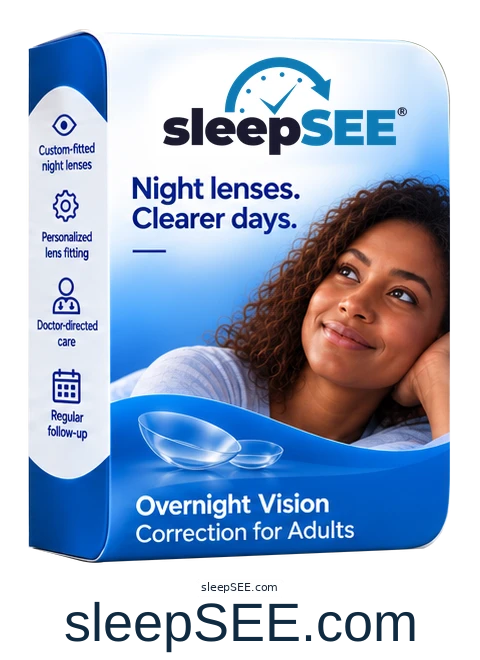
Want clear vision without surgery? Do soft contacts leave your eyes feeling dry? sleepSEE uses custom overnight contact lenses, called Ortho-K. Wear them while you sleep and remove them each morning for clearer daytime vision without the need for glasses or contacts.
Vision changed after LASIK? Explore repeat LASIK and nonsurgical options.
See the $93 Fayetteville Evaluation
Which One Sounds Like You?
Ortho-K is short for orthokeratology. It uses overnight contact lenses to change the shape of the cornea, the clear front of the eye. Your sleepSEE doctor checks your eyes, fits your lenses and follows your progress. Because the change is temporary, continued lens wear is part of the routine.
Active Adults Who Want
Clear Vision
You don't want glasses. Daytime contacts are uncomfortable. You may not want laser surgery. Sound familiar?
- Glasses fog up, slip or get in the way.
- Daytime contacts feel dry or sore.
- You enjoy sports and travel.
- You want a choice without surgery.
- Looking for vision correction without surgery
Post-LASIK or PRK
Regression
If your vision has become blurry again after LASIK or PRK, you may be wondering whether another operation is your only option. An eye exam can help you understand what has changed.
- Vision has changed since LASIK or PRK.
- Told you can't have a second LASIK procedure
- Nervous about going through laser surgery again
- Want a nonsurgical option instead of another procedure
- Looking for a nonsurgical option
Nothing sits on your eyes during the day.
Daytime contacts stay on the eyes for hours. Some adults find that this wear causes dryness or discomfort.
sleepSEE lenses are worn overnight and removed in the morning. During the day, nothing sits on your eyes. Adults who struggle with daytime contact-lens discomfort can ask a provider whether overnight lens wear fits their needs.
Daytime Dryness and Overnight Wear: What's Different
Dry eyes need an exam and their own care plan. Having lenses out during the day does not prove that overnight wear is right for you.
How sleepSEE Restores
Clear Vision After LASIK
LASIK removes tissue from the cornea with a laser. That tissue does not grow back. Vision can still change later. An exam helps find out why. Here is how sleepSEE helps.
LASIK Reshapes the Cornea
LASIK uses a laser to remove some corneal tissue. This changes how the eye focuses light.
Over Time, the Cornea Shifts Back
Vision can change after surgery. Changes in the cornea are one cause, but dry eye, eye aging and other problems can also affect sight. An exam should find the cause before more treatment.
sleepSEE Gently Reshapes the Cornea
sleepSEE lenses change the cornea’s shape during sleep. The effect is temporary. A map of the cornea and your prescription help guide the fit.
Wake Up, Lenses Out: the Goal Is Clear Daytime Vision
Take the lenses out in the morning. Wear them as prescribed to keep the effect. When wear stops, the cornea returns toward its prior shape.


Before: Myopic Eye
With myopia, or nearsightedness, light focuses in front of the retina at the back of the eye. That makes distant objects look blurry. The eye’s length and focusing shape affect where the light lands.
sleepSEE vs. Other Options
| Factor |  | LASIK / PRK | Soft Contacts | Glasses |
|---|---|---|---|---|
| Surgery Required | No | Yes | N/A | N/A |
| Reversible | Yes | No: permanent | N/A | N/A |
| Daytime Wear | No | N/A | All day | All day |
| Active Lifestyle | Excellent | Excellent | Good | Ok |
| Post-LASIK Option | May be considered after individual evaluation | If cornea supports | N/A | N/A |
Precision Equipment.
Expert Care.
sleepSEE providers use detailed eye measurements to fit your lenses and check how your eyes respond.
Corneal Topography
Maps the cornea’s shape to help fit the lenses and check changes at later visits.
Eye Length Measurement
Axial-Length Biometry
Tracks eye length over time to help assess worsening nearsightedness.
Wavefront Aberrometry
Shows how light moves through the eye to help assess focus.
The Pros and Cons of sleepSEE for Adults
Here’s what sleepSEE offers and what the day-to-day care involves.
The Pros
- No surgery: no cutting or laser procedure
- Temporary effect: when wear stops, the cornea returns toward its prior shape. Harm from a lens problem may not reverse.
- No daytime lens wear: nothing sits on your eyes during the day
- May suit some people after LASIK: an eye exam is needed
- At the founding location, a full lens pair is bought every 2 years
- Can support active days with no daytime lens wear after a good fit
Things to Know
- Needs prescribed wear to keep the vision effect
- Not right for every prescription, eye shape or eye condition
- Vision can change during fitting
- Requires an experienced ortho-k provider. Not all eye doctors offer this
- Costs vary by provider.
- Keep backup glasses if your doctor advises them.
Every patient is different. The best way to know if sleepSEE is right for you is to talk with an experienced provider.
What are contacts you sleep in for clearer daytime vision?
Ortho-K lenses are prescription contacts worn during sleep. They change the shape of the cornea, the clear front of the eye. Take them out in the morning. The goal is clear daytime sight. They are different from soft contacts approved for overnight wear. Your doctor checks the fit and teaches lens care.
Can I correct my vision without surgery?
Ortho-K is one choice. Wear the lenses during sleep and remove them for the day. The effect is temporary, so ongoing wear and eye checks are part of the plan. An eye exam checks whether they fit your needs.
Is Ortho-K a nonsurgical alternative to LASIK?
For some people, yes. Ortho-K can help you see during the day without glasses or contacts. LASIK removes eye tissue. Ortho-K uses lenses and has a temporary effect. Neither stops eye aging or promises glasses-free sight for life. Ask a doctor about the risks and fit for your eyes.
Ready for Clear Vision
Without Surgery?
Find an experienced sleepSEE provider near you to discuss your eyes and care choices.