"Am I too old for this?"
A patient asked me that just last week. He was a 52-year-old architect, tired of his progressive glasses fogging up when he went from his car to a job site. He’d heard about sleepSEE®, my practice's name for Ortho-K, from a coworker whose son was in our myopia control program. He was intrigued by the idea of lens-free vision during the day but had a nagging thought: isn't that just for kids?
It’s a common question I hear from folks in their 40s, 50s, and even 60s here in Fayetteville. There’s a persistent myth that Ortho-K is only a tool for slowing down nearsightedness in children. And while it’s fantastic for that, the truth is, adults can be amazing candidates. Here's the thing: the desire for visual freedom doesn’t have an age limit. Whether you're a teacher in the Cumberland County school system tired of misplacing your readers, or a service member at Fort Liberty who needs crisp, reliable vision without the hassle of glasses or contacts, the goal is the same. You just want to see.
So, let's clear the air. Are you too old for Ortho-K? For the vast majority of adults, the answer is a resounding no. Let me explain why that matters.
Table of Contents
- It's Not Just for Kids Anymore
- How Ortho-K Works for the "Seasoned" Eye
- The Presbyopia Predicament: Can Ortho-K Help?
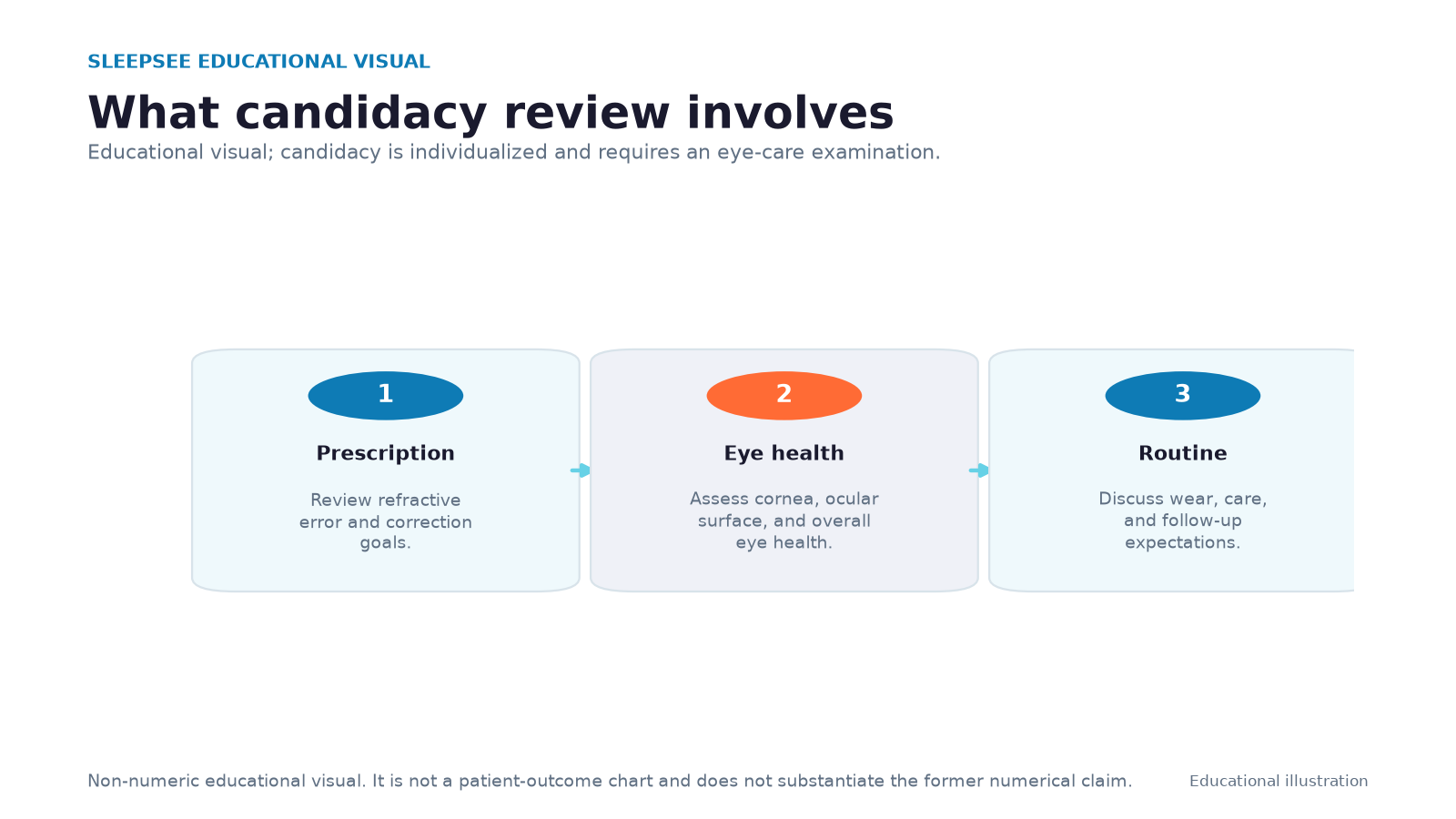
- Are You a Good Candidate? A Look at the Factors
- Real Stories from My Fayetteville Practice
- Ortho-K vs. Other Options: A Quick Comparison
- A Note on Insurance and Cost
- Frequently Asked Questions
It's Not Just for Kids Anymore
First, let's get this out of the way. The reason Ortho-K is so popular for kids is its proven ability to slow the progression of myopia, or nearsightedness. It’s a powerful tool for Myopia Control [blocked], and as a specialist in the field, it’s a huge part of my practice. But the original use of Ortho-K, going back decades, was simply for vision correction. It was for people who wanted to ditch their glasses and daytime contacts.
That appeal is stronger than ever for adults. Think about it. No more contacts drying out in the middle of a long day. No more glasses slipping down your nose when you’re trying to enjoy a hike at the Cape Fear River Trail. For many of my adult patients, it’s about convenience and quality of life. It’s about being able to wake up in the morning and see the alarm clock clearly, or being able to swim without worrying about losing a lens.

How Ortho-K Works for the "Seasoned" Eye
The basic principle of how it works [blocked] is the same at any age. You wear custom-designed rigid gas-permeable lenses overnight. These lenses, which we call sleepSEE® lenses, gently and safely reshape the front surface of your eye (the cornea). You take them out in the morning, and—voila—clear vision all day long. The effect is temporary, lasting a day or two, which is why you wear the lenses each night.
Now, as we get older, our eyes do change. The cornea can become slightly less flexible, and our tear film might not be as robust as it was in our twenties. Does this rule out Ortho-K? Not at all. It just means the initial evaluation is incredibly important. In my clinic, we use advanced corneal topography to create a precise map of your eye’s surface. This isn’t just a standard eye exam. We’re measuring the shape, rigidity, and cellular health of your cornea to ensure it’s healthy enough for the reshaping process. We also do a deep dive into your tear film quality, because a healthy tear layer is crucial for comfort and success with the lenses.
The Presbyopia Predicament: Can Ortho-K Help?
Ah, presbyopia. The official term for "my arms are suddenly too short to read this menu." It’s the natural, age-related change that makes it difficult to focus on things up close, and it typically kicks in around age 40. This is often the biggest concern for my adult patients. They wonder, "If Ortho-K corrects my distance vision, will I just have to wear reading glasses for everything up close?"
It’s a great question, and the answer is: not necessarily. We have sophisticated ways to address presbyopia with Ortho-K:
- Monovision: This is the most common approach. We fully correct the distance vision in your dominant eye and intentionally leave your non-dominant eye slightly nearsighted. Your brain learns to blend the two images, giving you clear vision at distance with one eye and clear vision up close with the other. It sounds strange, but the brain is amazing at adapting. We always simulate this with trial lenses in the office first to make sure you’re comfortable with it.
- Multifocal Designs: There are also advanced Ortho-K lenses that create different "zones" of power on the cornea, similar to a progressive eyeglass lens. This allows for clear vision at multiple distances in each eye.
The best option depends entirely on your specific prescription, visual needs, and lifestyle. A truck driver is going to have different needs than a graphic designer, and we tailor the treatment plan accordingly.
Are You a Good Candidate? A Look at the Factors
Success with Ortho-K for adults isn't so much about your age in years, but the "age" of your eyes. During your consultation, we look at a few key factors. While success rates are high across the board, candidacy is key.

- Your Prescription: Ortho-K works best for low to moderate amounts of nearsightedness (up to about -6.00 diopters) and astigmatism (up to about -1.75 diopters). Higher prescriptions can sometimes be treated, but it’s on a case-by-case basis.
- Corneal Health: Your corneas must be healthy, without any significant scarring, disease, or irregularities. This is where our topography mapping is essential.
- Eye Health: Conditions like severe dry eye, uncontrolled glaucoma, or certain eyelid issues might make Ortho-K a poor choice. We have to make sure your eyes are healthy enough for overnight lens wear.
- Motivation: You have to be committed to the process. This means wearing the lenses every night and being diligent about cleaning and caring for them. It’s a partnership between you and me.

Real Stories from My Fayetteville Practice
I can talk about the science all day, but what really matters are the results. I think of Sarah, a 48-year-old nurse who was frustrated with her glasses fogging up while wearing a mask at work. She was a perfect candidate for monovision Ortho-K. Within a week, she was seeing 20/20 at a distance and could read her charts and patient notes without reaching for cheaters. It was a game-changer for her.
Then there’s David, a 62-year-old retired Army officer from the Fort Liberty community. He’s an avid golfer and was sick of his bifocal contacts shifting around and affecting his view of the ball. We fit him in a multifocal sleepSEE® design. The first time he came back after a weekend of golf, he was beaming. He said he hadn’t seen the ball that clearly on the fairway in 20 years.
These are the stories that make my job so rewarding. It’s not about chasing youth; it’s about restoring function and freedom.
Ortho-K vs. Other Options: A Quick Comparison
How does sleepSEE® stack up against other options for adults over 40?
| Feature | Ortho-K (sleepSEE®) | LASIK | Progressive Glasses | Bifocal Contacts |
|---|---|---|---|---|
| Reversibility | Yes, 100% | No, it's permanent | Yes | Yes |
| Presbyopia Correction | Yes (Monovision/Multifocal) | Yes (Monovision/Blended) | Yes | Yes |
| Surgical | No | Yes | No | No |
| Dry Eye Risk | Lower than daytime contacts | Can worsen existing dry eye | None | Can worsen dry eye |
| Good for Active Lifestyles | Excellent | Excellent | Can be inconvenient | Good |
For many, the biggest advantage of Ortho-K is that it’s completely reversible. If you don’t like it or if your prescription changes down the road, you just stop wearing the lenses and your eyes return to their original state. You can’t say that about a surgical procedure like LASIK. [1]
A Note on Insurance and Cost
Let’s be upfront about the investment. Because of the custom-designed lenses and the high level of professional care required, sleepSEE® myopia control is a specialty service not covered by insurance. That includes plans like TRICARE and Blue Cross NC. However, we believe clear vision should be accessible, so we offer flexible payment options and you can absolutely use your Health Savings Account (HSA) or Flexible Spending Account (FSA) funds to cover the cost.
Frequently Asked Questions
1. Is it uncomfortable to sleep with the lenses in? Most patients report that after the first few nights, they don't even notice the lenses are there. The initial sensation is similar to a standard rigid gas permeable lens, but since your eyes are closed and not blinking, the awareness quickly fades.
2. How long does it take to see clearly? You'll notice a significant improvement after the very first night. For most patients, it takes about 7 to 14 days to reach their full, stable, clear vision.
3. What if my prescription changes? That’s one of the beauties of Ortho-K. If your prescription changes, we can simply redesign your lenses. You don't need a whole new procedure. This is particularly useful for adults with presbyopia, as their reading needs may change over time.
4. Are there any risks? The risks associated with Ortho-K are similar to those of any contact lens wear, with the primary risk being eye infection. However, this risk is extremely low when you follow proper lens care and hygiene instructions. Studies have shown the incidence of microbial keratitis with overnight Ortho-K is about 7.7 per 10,000 patient-years, which is on par with other overnight contact lens modalities. [2]
5. Can I still use reading glasses if I need a boost? Absolutely. Some patients, especially those with very demanding near tasks, may still want a pair of low-power reading glasses for extra comfort during prolonged reading. The goal is to be free from glasses most of the time, but it’s always an option.
6. I have astigmatism. Can I still do Ortho-K? Yes, in most cases. Modern Ortho-K lenses are excellent at correcting mild to moderate amounts of astigmatism. The corneal topography map we create will tell us definitively if you are a good candidate.
So, are you too old for Ortho-K? I hope you see now that age is just a number. The real questions are about your eye health, your prescription, and your desire for a life with less reliance on glasses and contacts. If you're tired of the vision struggle, maybe it's time to see if sleepSEE® is right for you.
References:
- American Academy of Ophthalmology. What Is Orthokeratology? https://www.aao.org/eye-health/glasses-contacts/what-is-orthokeratology
- Bullimore, M. A., Sinnott, L. T., & Jones-Jordan, L. A. (2013). The risk of microbial keratitis with overnight corneal reshaping lenses. Optometry and Vision Science, 90(9), 937–944. https://journals.lww.com/optvissci/fulltext/2013/09000/the_risk_of_microbial_keratitis_with_overnight.1.aspx
- Lipson, M. J., & Sugar, A. (2018). Presbyopia: A Review of Current Treatment Options and Emerging Technologies. Journal of the American Medical Association (JAMA) Ophthalmology, 136(4), 424-432.
Last reviewed: February 2026
Free Download: Is Ortho-K Right for Me?
A self-assessment guide used by candidates evaluating ortho-k vs. LASIK vs. contacts.
- Candidacy criteria (prescription range, corneal shape)
- Ortho-K vs. LASIK vs. daily contacts comparison
- 5-year cost breakdown
- Questions to ask your provider
Is Ortho-K Right for Me?
For Adults — Free Self-Assessment
sleepSEE Clinical Team
The sleepSEE Clinical Team is a group of licensed eye care professionals dedicated to evidence-based education on myopia control, orthokeratology, and nonsurgical vision correction.