
Long shifts can make glasses or contacts hard to manage. Masks may fog lenses. Daytime contacts may feel dry. If this happens to you, an eye exam can check the cause and help you compare choices.
sleepSEE uses Ortho-K lenses worn during sleep and removed in the morning. The goal is clear vision through your waking hours, with no daytime glasses or contacts. Your work and sleep schedule are part of the fitting decision.
The Daily Grind: Why Glasses and Contacts Fail in Healthcare
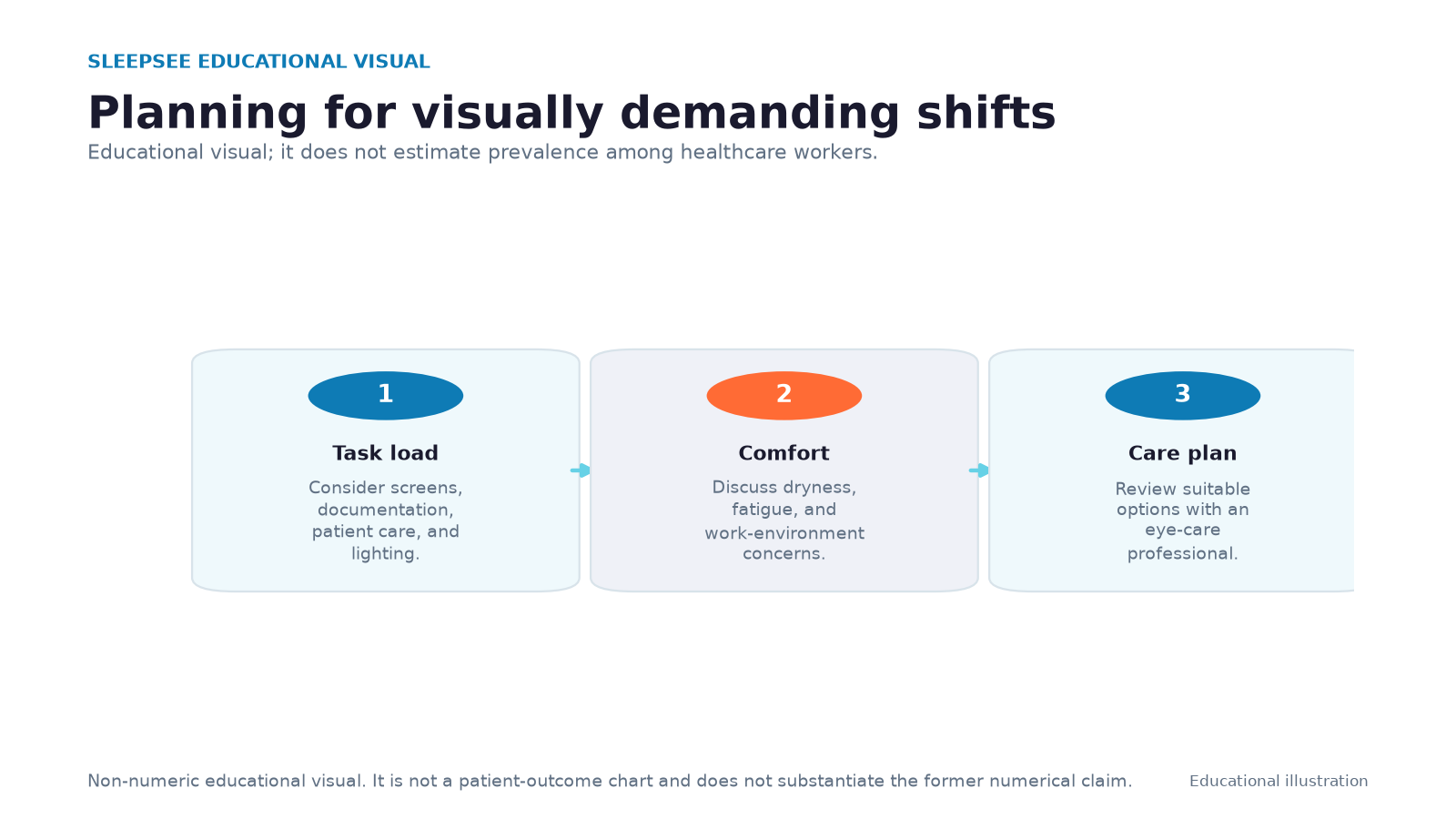
Glasses and contacts work well for many healthcare workers. Others struggle with fog, slipping frames or dryness. Tell your doctor which tasks are hard: reading labels, using a screen, looking across a room or working in dim light.
A new type of correction does not replace required eye protection or infection-control steps. Follow your workplace's PPE rules with any vision plan.
A Better Way: Freedom with sleepSEE (Ortho-K)
Ortho-K lenses change the shape of the cornea, the clear front of the eye. That helps focus light after the lenses come out. The effect is temporary and needs ongoing wear. Learn how it works.
The doctor checks how you see during fitting and follow-up. The goal is useful vision through your shift. Dryness or blur still needs assessment; lens-free daytime vision is not a promise of comfort for every eye.
Ortho-K vs. Glasses vs. Contacts: A Quick Comparison
| Question | Ortho-K | Glasses | Daytime contacts |
|---|---|---|---|
| Lenses during a shift? | No, once removed | Yes | Yes |
| Mask fog on glasses? | No glasses needed if correction meets your needs | Can happen | No glasses lenses to fog |
| Routine | Sleep-time wear, cleaning and checks | Wear and clean glasses | Wear and care as prescribed |
| Dry eye | Needs its own assessment | Avoids contact-lens wear | May affect comfort |
| PPE | Still required | Still required | Still required |
Real-World Benefits for Fayetteville’s Healthcare Heroes
At Cape Fear Valley, Womack or any other workplace, the useful question is whether the full plan fits your life. Less need for daytime lenses can make some tasks easier. It does not prove better job performance or lower infection risk.
Bring your shift pattern to the visit. Discuss daytime sleep, on-call work and changing hours. Ask what to do after poor sleep and what backup correction to keep.

Think through tasks on your own shift. You may move from a small label to a screen and then across a room. Tell the doctor about those distances, lighting and required protective gear. “I want no daytime lenses” is a preference; seeing each work task clearly is the practical goal.
For rotating shifts, bring a sample schedule to the visit. Ask how the prescribed wear plan fits your main sleep period and what to do when it changes. Plan care time before you are exhausted, and keep advised backup correction available. These are planning examples, not a promise of better work performance.
Is sleepSEE Right for You?
Your doctor checks your prescription, tears, eye health and corneal shape. A corneal map helps guide lens fitting. The exam also checks whether the correction can meet your distance and reading needs.
You need to clean the lenses and attend follow-up visits. Overnight wear has risks, including serious infection. Remove lenses and call your eye doctor for pain, redness, light sensitivity or sudden blur.
Read what sleepSEE involves or check candidacy. A screener is a starting point; an eye exam gives the real answer.
The Practical Details: Cost & Insurance
At the founding Fayetteville location, Nonsurgical Vision Correction costs $2,400 for the first year for both eyes. Program fees are private-pay; insurance and TRICARE are not accepted for these fees. A full replacement pair costs $490 and is purchased every two years. Each lens is $245.
See current fees and payment options, including later exams and supplies. Other providers may have different fees. Ask how visits can fit around your shifts.
Frequently Asked Questions (FAQ)
Can I use Ortho-K if I work nights?
Discuss your actual sleep hours with the provider. The wear plan must fit your sleep routine; working nights alone does not answer the question.
Will I still need safety eyewear?
Yes. Follow the same workplace eye-protection rules, even if you no longer need daytime vision lenses.
Is Ortho-K Right for Me?
Learn how sleepSEE Ortho-K may fit your eyes, your daily routine, and your budget.
- Learn what the eye exam checks.
- Plan for work, reading, night driving, travel and shift work.
- Plan costs with a five-year example and worksheet.
- Explore the first month, lens care and six questions for your doctor.

Is Ortho-K Right for Me?
8-page PDF · Fill in or print
Dr. James Singletary, OD, FIAOMC
Dr. James Singletary is a licensed eye doctor. His main field is Ortho-K. He helps people see clearly without surgery. He also cares for children to help slow myopia, or nearsightedness. He created the sleepSEE Ortho-K program.
Medical Disclaimer
This article helps you learn about eye care. It is not personal medical advice, a diagnosis or a treatment plan. Ask a qualified eye doctor about your eyes and care. Do not use this page in place of that advice.