New glasses can clear a child's blur. A plan to slow myopia asks a second question: can we slow the eye changes that keep making the prescription stronger?
Overnight Ortho-K is one option. It aims to provide clear daytime vision and can help slow myopia in children. The doctor must check both goals over time.
What Is Myopia, and Why Should Parents Worry?
Myopia means nearsightedness. Faraway things look blurry because light focuses in front of the retina. The retina is the layer at the back of the eye that senses light. Often, a myopic eye has grown too long.
Myopia may progress during childhood. Bring old prescriptions to each new eye doctor, especially if your family moves. That record helps show what has changed.
The Numbers Are Alarming
Myopia is common around the world. Population forecasts explain why it gets attention, but they do not predict your child's prescription.
For your family, the useful numbers are your child's measurements over time. Ask what was measured, how much it changed and when it should be checked again.
The Long-Term Risks Nobody Talks About
Higher myopia is linked to a greater risk of serious eye problems. The retina, the layer at the back of the eye, may pull loose. This is called retinal detachment. Disease may also harm the center of vision. These risks are a reason to check eye health. They do not mean that your child will lose sight.
Clear vision with glasses or lenses does not remove those risks. Ask about both blur correction and myopia management. NEI: myopia and eye health.
Why Is This Happening So Fast?
Family eye history and the way your child uses their eyes both matter. Talk about close work and time outdoors. No single habit explains every case.
Time outdoors can help lower the chance that myopia starts. It is not a substitute for treatment once myopia is present. Take regular breaks from close work and discuss healthy routines with the doctor.
How sleepSEE Overnight Lenses Work
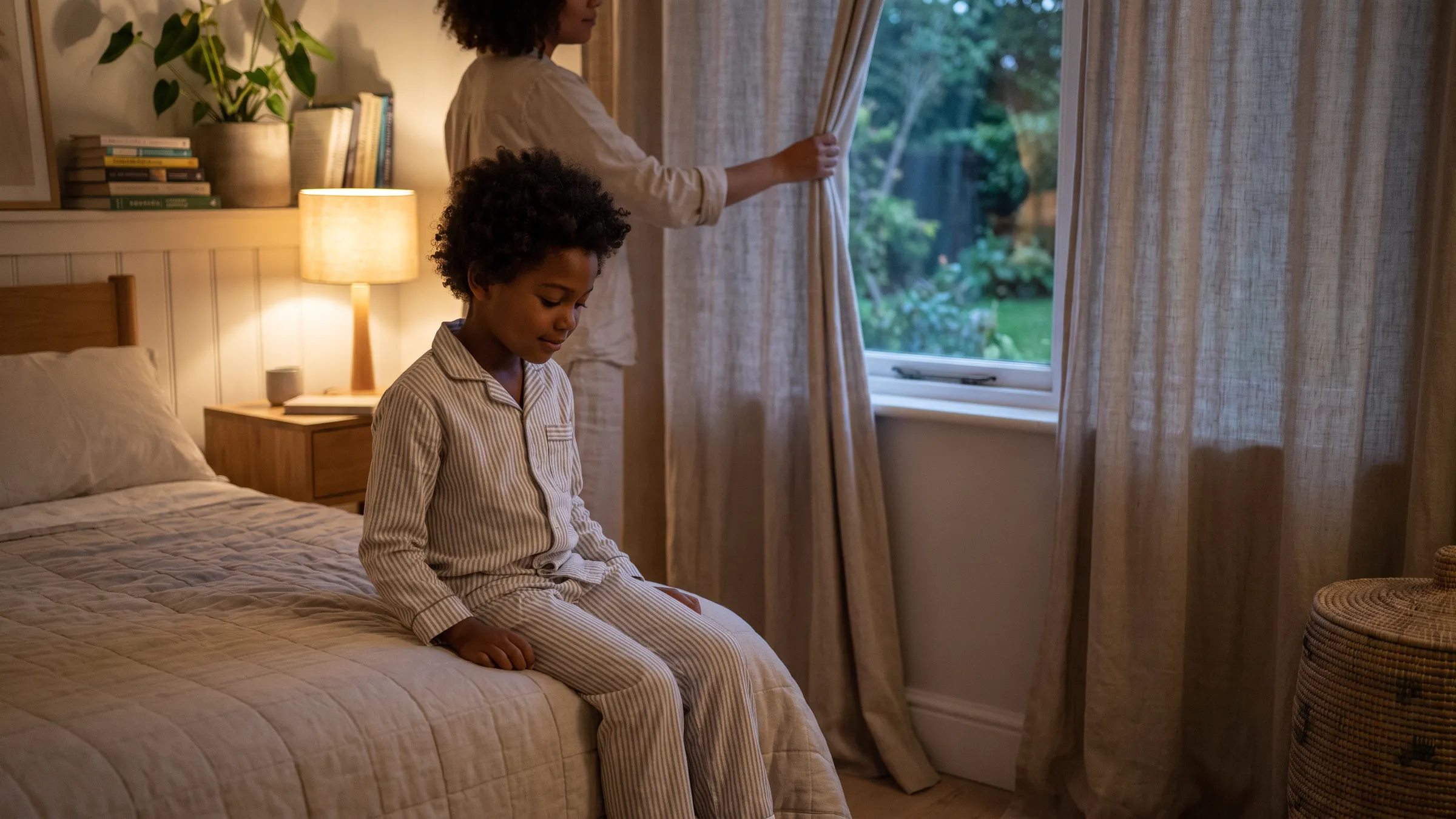
The child wears fitted lenses during sleep and removes them in the morning. The lenses change the cornea, the clear front of the eye. The goal is clear daytime vision with no daytime glasses or contacts.
The changed shape also changes where light focuses across the retina. Light focused in front of its outer area is called peripheral myopic defocus. This is thought to be part of the signal that slows eye growth. It does not stop all growth.
The vision effect wears off if lens wear stops. Children still need a plan for myopia care during a break. Research results for a group are not a guaranteed percentage reduction for one child.
sleepSEE vs. Glasses: Side-by-Side
| Question | Ortho-K | Standard single-vision glasses |
|---|---|---|
| How is vision corrected? | Corneal shape change after overnight wear | Lenses focus light while glasses are worn |
| Can it slow childhood myopia? | Research supports this use; response varies | Not designed for this purpose |
| Daily routine | Lens wear, cleaning and storage | Wear and clean glasses |
| Main risks to discuss | Lens problems, including serious infection | Fit, breakage and the need for eye protection |
| Follow-up | Vision, eye health, fit and growth checks | Vision and eye health checks; separate myopia plan if needed |
Special myopia-control glasses differ from standard glasses that use one lens power. Ask about the exact product and care plan. These special glasses are outside the sleepSEE program.
Separate two questions when you read this table. “Can my child see clearly?” is about correction. “How fast is the eye changing?” is about progression. Standard glasses can clear blur without being a myopia-control treatment. Some special glasses are designed for both goals. The same distinction matters when you compare lenses and eye drops.
Ask how your child's results will be recorded over time. Keep dated prescriptions and eye-length readings when available. If you move or change doctors, those records help the next provider see the trend rather than starting with one isolated result.
When Should You Start?
If the prescription is changing, arrange an exam. Age alone cannot decide which treatment is suitable. The doctor checks eye health, prescription history, measurements and the routine your family can manage.
Ask how progress will be tracked and when the plan would change. IMI guidance. Explore sleepSEE for children.
Frequently Asked Questions
Will my child see clearly after one night?
Some children improve quickly, while others need more time or fitting changes. Follow-up checks guide the next step. Ask what backup correction to use.
Does seeing clearly prove that myopia is controlled?
No. That requires eye measurements over time. Keep checks even if your child likes their daytime vision.
Dr. James Singletary, OD, FIAOMC
Dr. James Singletary is a licensed eye doctor. His main field is Ortho-K. He helps people see clearly without surgery. He also cares for children to help slow myopia, or nearsightedness. He created the sleepSEE Ortho-K program.
Medical Disclaimer
This article helps you learn about eye care. It is not personal medical advice, a diagnosis or a treatment plan. Ask a qualified eye doctor about your eyes and care. Do not use this page in place of that advice.