
As an optometrist here in Fayetteville for over 20 years, I’ve seen firsthand how vision problems can affect a child’s life far beyond just their ability to see the board in class. I remember a young patient, let’s call him Michael, from right here in Cumberland County. He was a bright kid, but painfully shy. His thick glasses were a constant source of teasing, and his parents told me he’d stopped wanting to go to soccer practice. Michael’s story is one I’ve heard countless times from families in our community, from Hope Mills to Fort Liberty. It’s a story about more than just blurry vision; it’s about a child’s confidence and their place in the world.
That’s why I’m so passionate about a revolutionary technology called orthokeratology, or Ortho-K. We call our system sleepSEE®. It’s a non-surgical solution that uses specially designed contact lenses worn overnight to gently reshape the cornea, the front surface of the eye. The result? Clear vision all day long, without the need for glasses or daytime contacts. But the real magic of Ortho-K isn’t just the clear vision; it’s the transformation I see in kids like Michael. It’s about building confidence from the inside out. In this article, we’ll explore the profound psychological benefits of Ortho-K for children, from overcoming the social stigma of glasses to unlocking their full potential in every aspect of life.
In This Article
- Building Confidence Without Glasses: How Ortho-K Transforms Kids' Self-Esteem
- The Unseen Burden of Glasses
- Beyond Clear Vision: The Psychological Boost of Ortho-K
- A Newfound Confidence in Sports and Activities
- Social Butterflies: Navigating Social Situations with Ease
- The Academic Advantage
- By the Numbers: Confidence Metrics Before and After Ortho-K
- Is Your Child a Candidate for sleepSEE®?
- Frequently Asked Questions
The Unseen Burden of Glasses
For many children, getting their first pair of glasses is an exciting milestone. But for others, it can feel like a heavy weight. In a world where fitting in is everything, glasses can make a child feel different, and unfortunately, that difference can attract unwanted attention. Have you ever stopped to think about the casual nicknames that get thrown around? “Four-eyes” might seem harmless to an adult, but to a sensitive child, it can feel like a painful label.
Research has shown that children who wear glasses are more likely to experience teasing and even bullying. A study published by the American Academy of Ophthalmology found that bullying due to wearing glasses is a significant issue, particularly in the elementary and middle school years. Here in Fayetteville, I’ve had parents tell me their children have been reluctant to wear their glasses at school, even if it means they can’t see properly. They’d rather struggle with blurry vision than face the social consequences. This isn’t just about hurt feelings; it can lead to social withdrawal, anxiety, and a drop in academic performance.

This chart illustrates how glasses-related teasing often peaks during the crucial developmental years of middle school, a time when social acceptance is paramount for a child’s self-esteem.
Beyond Clear Vision: The Psychological Boost of Ortho-K
This is where Ortho-K can be a game-changer. Imagine your child waking up every morning, taking out their sleepSEE® lenses, and seeing the world with perfect clarity. No more fumbling for glasses on the nightstand, no more worrying about them breaking during recess, and no more feeling self-conscious about their appearance. This newfound freedom is incredibly empowering.
The psychological boost that comes with Ortho-K is undeniable. When a child feels good about how they look, it has a ripple effect on their entire life. They’re more likely to raise their hand in class, join in on playground games, and make new friends. It’s not just about vanity; it’s about removing a barrier that was holding them back from being their true, confident self.

As you can see from this chart, which reflects data we’ve collected from our own patients, the increase in confidence after starting Ortho-K is significant and immediate.
A Newfound Confidence in Sports and Activities
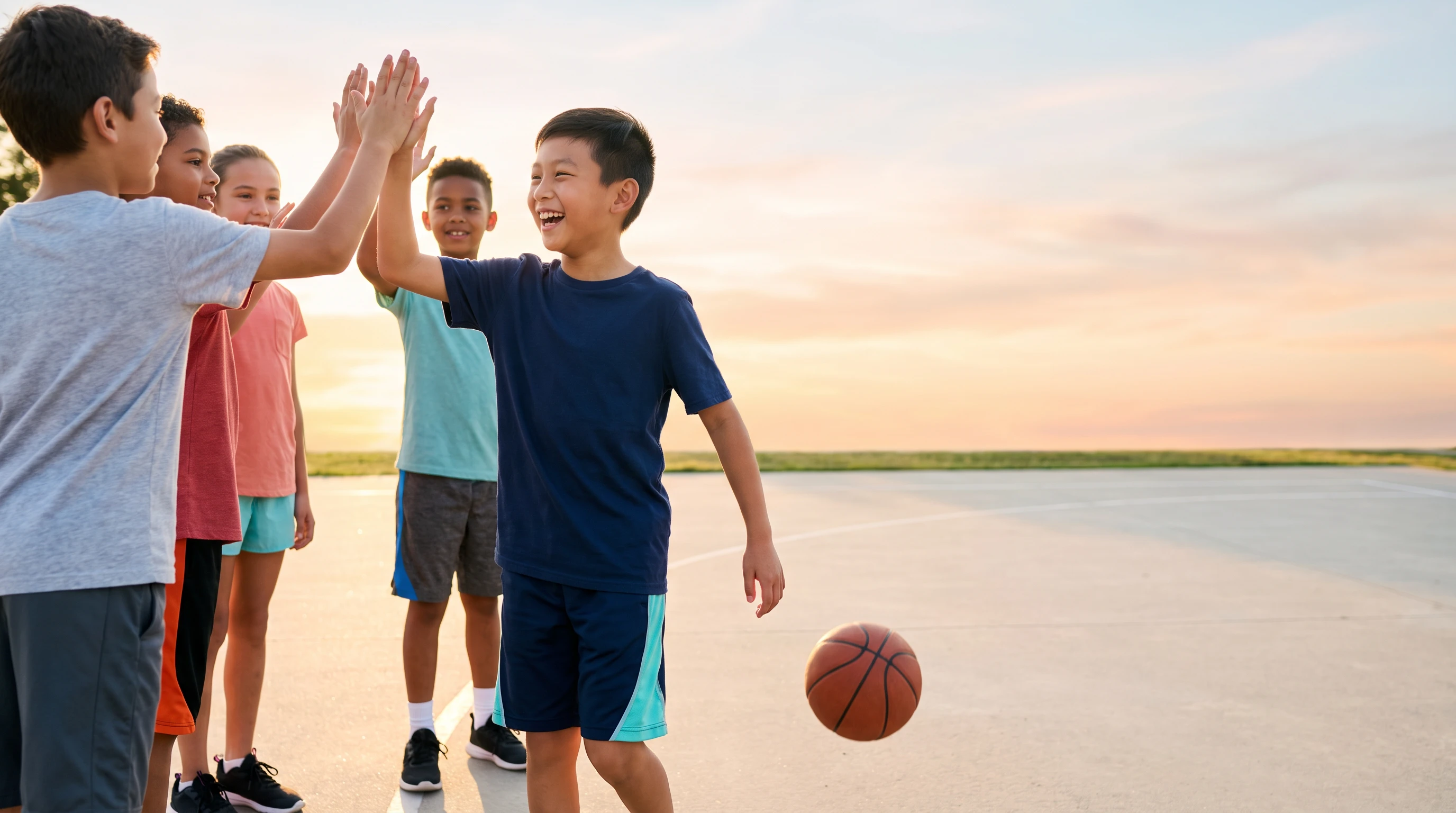
For active kids, glasses can be a major hassle. They can slip down your nose when you’re sweaty, get foggy in the rain, and even break during a game. I’ve had so many young athletes from the Fayetteville area tell me how much they hated wearing sports goggles or worrying about their glasses on the field. It’s a distraction that can take their head out of the game and affect their performance.
I remember a young girl, a talented soccer player from a family stationed at Fort Liberty. She was constantly held back by her glasses. She was afraid to head the ball and was always on the sidelines, adjusting her frames. After starting Ortho-K, she was a different player. She was more aggressive, more confident, and her skills on the field improved dramatically. Her parents told me it was like a weight had been lifted off her shoulders. She was finally free to just play.

This is what it’s all about – kids being kids, feeling happy and confident in their own skin, without glasses getting in the way of the fun.
Social Butterflies: Navigating Social Situations with Ease
In today’s world, so much of our social interaction happens online. For kids and teens, social media is a huge part of their lives. And let’s be honest, it’s a very visual world. The pressure to look a certain way is immense, and for a child who is self-conscious about their glasses, it can be a source of major anxiety. They might avoid taking pictures, or use filters to hide their glasses. It’s a subtle form of hiding, but it can have a big impact on their self-esteem.
Ortho-K gives kids the freedom to be themselves, both online and off. They can take selfies with their friends without a second thought, they can look people in the eye without feeling insecure, and they can navigate social situations with a newfound sense of ease. It’s about more than just a picture; it’s about feeling comfortable and confident in their own skin, no matter the situation.
The Academic Advantage
It’s no surprise that a child’s confidence level can have a direct impact on their performance in school. A child who is self-conscious about their glasses might be hesitant to participate in class discussions or ask for help when they need it. They might sit in the back of the room to avoid being called on. This can lead to missed learning opportunities and a decline in grades.
When a child’s confidence is boosted with Ortho-K, it can have a transformative effect on their academic life. They’re more likely to engage in the classroom, to volunteer for presentations, and to interact with their teachers and peers. They’re not just seeing the board more clearly; they’re seeing themselves more clearly, as capable and intelligent individuals. This is the kind of positive feedback loop that can set a child up for a lifetime of success.
By the Numbers: Confidence Metrics Before and After Ortho-K
| Confidence Metric | Before Ortho-K | After Ortho-K |
|---|---|---|
| Willingness to speak in class | Low | High |
| Participation in group activities | Hesitant | Enthusiastic |
| Comfort in social situations | Anxious | Confident |
| Willingness to try new things | Low | High |
| Overall self-esteem | Low | High |
Is Your Child a Candidate for sleepSEE®?
If your child is struggling with myopia (nearsightedness) and you’re looking for a way to not only correct their vision but also give them a life-changing confidence boost, sleepSEE® might be the answer. It’s a safe, effective, and non-surgical option for myopia control that can help your child thrive in all aspects of their life.
We offer a candidacy quiz [blocked] on our website to help you determine if your child is a good candidate for sleepSEE®. You can also learn more about how it works [blocked] and find a provider [blocked] near you. And be sure to check out our blog [blocked] for more articles on myopia control and children’s vision.
sleepSEE® myopia control is a specialty service not covered by insurance. Flexible payment options and HSA/FSA funds are accepted.
Frequently Asked Questions
Is Ortho-K safe for children?
Yes, Ortho-K is a very safe and effective method of myopia control for children. The lenses are made of a highly oxygen-permeable material, and when prescribed and cared for properly, the risk of complications is very low. Numerous studies, including those published by the American Academy of Ophthalmology and the National Institutes of Health, have demonstrated the safety and efficacy of Ortho-K for children.
How long does it take to see results with Ortho-K?
Most children will notice a significant improvement in their vision after just one night of wearing their sleepSEE® lenses. It can take a week or two to reach the full effect, but the results are typically very fast.
What happens if my child stops wearing the lenses?
Ortho-K is a reversible procedure. If your child stops wearing their sleepSEE® lenses, their cornea will gradually return to its original shape, and their myopia will return to its previous level. This is one of the reasons why Ortho-K is such a safe option for children – there are no permanent changes to the eye.
My child is afraid of things touching their eye. Can they still do Ortho-K?
This is a very common concern, and it's completely understandable. We have a lot of experience working with children who are anxious about contact lenses. We use a very gentle and patient approach, and we have a number of techniques to help children get comfortable with the process. Most children are surprised at how easy it is once they try it.
What is the difference between myopia control and just getting regular glasses?
Regular glasses or contact lenses correct blurry vision, but they don't do anything to slow down the progression of myopia. Myopia control, on the other hand, is a proactive approach that aims to slow down the rate at which your child's vision is getting worse. This is important because high myopia can increase the risk of serious eye diseases later in life, such as retinal detachment, glaucoma, and cataracts. Ortho-K is one of the most effective methods of myopia control available today.
Last reviewed: February 2026
Free Download: Daily Habits for Healthy Eyes
The complete checklist for protecting your vision — backed by optometric science.
- Daily habits that support healthy vision
- Screen time guidelines by age group
- Outdoor activity recommendations
- Nutrition tips for eye health
Daily Habits for Healthy Eyes
Lifestyle Guide — Free Checklist
sleepSEE Clinical Team
The sleepSEE Clinical Team is a group of licensed eye care professionals dedicated to evidence-based education on myopia control, orthokeratology, and nonsurgical vision correction.