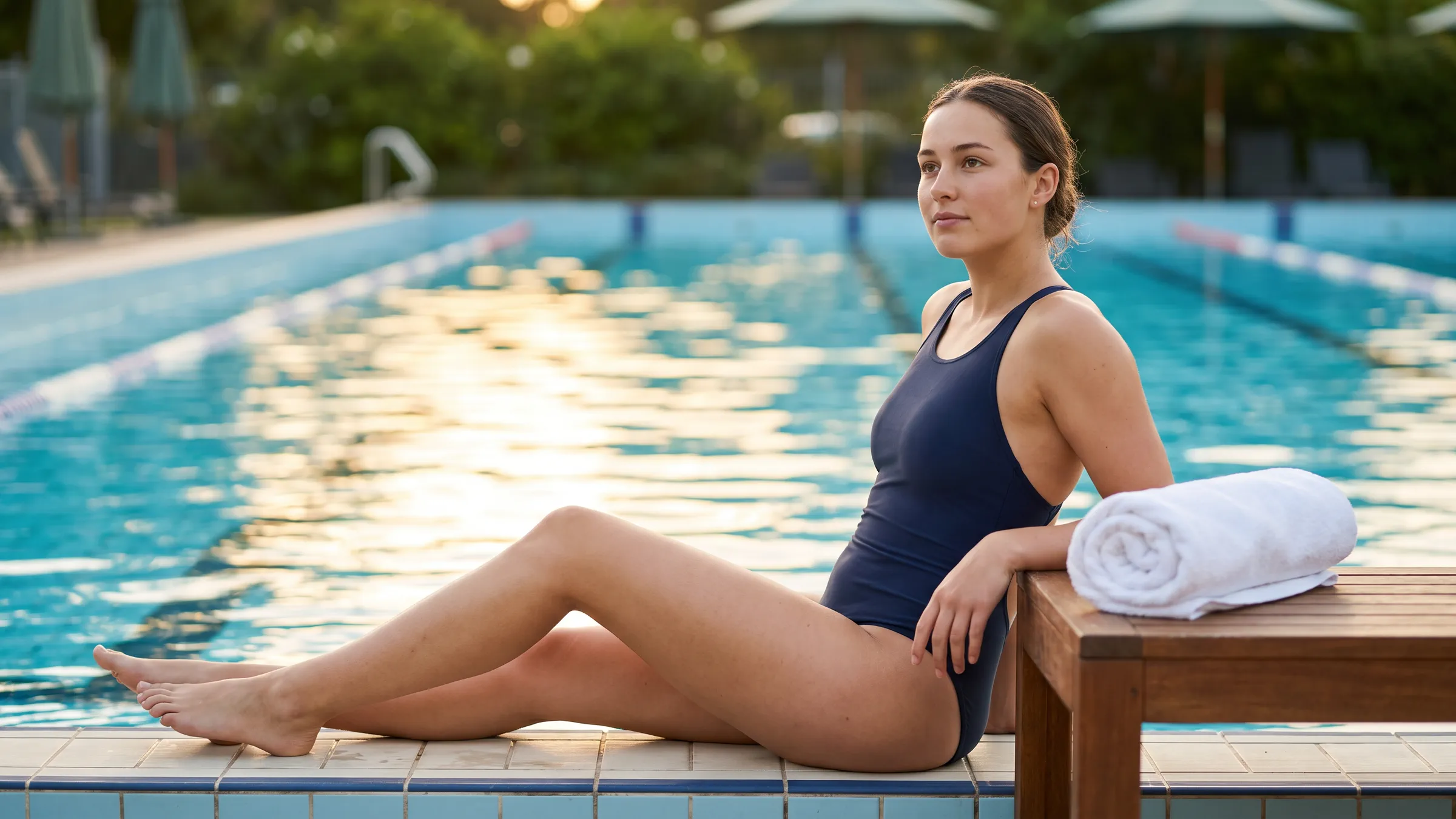
Do not swim in contact lenses. Pool, lake, ocean and hot-tub water can carry germs that cause serious eye infection. Keep lenses and cases away from water.
Ortho-K may offer daytime vision after the overnight lenses come out. For a suitable wearer, that can mean swimming without contacts. It does not make water harmless or replace goggles.
The Hidden Dangers of Swimming with Contacts
A lens exposed to water can trap germs against the eye. One concern is Acanthamoeba, an organism that can cause a serious infection of the cornea. The cornea is the clear front of the eye.
This infection can be hard to treat and can harm sight. Keep lenses out of all water. You cannot judge which pool is safe for lens wear. FDA: contact-lens risks.
Why Your Eyes Are At Risk in Any Water
Swimming Pools & Hot Tubs
Chlorine does not make water safe for contact lenses. Remove lenses before getting in, even at a well-maintained pool.
Oceans, Lakes, and Rivers
Saltwater and fresh water are not sterile. The no-lens rule applies to both. It also applies to showers and water used at home to clean or store lenses.
Ortho-K: A Lens-Free Option for the Water
Ortho-K uses fitted lenses during sleep. They change the cornea's shape, then come out in the morning. The goal is clear daytime vision without daytime glasses or contacts.
Having lenses out avoids exposing a worn lens to water. It does not remove all eye-infection or injury risk. Wear suitable goggles and check that your vision meets the needs of the activity.
Overnight lenses still need cleaning, eye checks and an exam of your eyes. The sight effect lasts for a short time. Keep wearing the lenses as your doctor directs to keep that effect.
A Clear Advantage: Comparing Vision Correction for Water Activities
| Choice | What to know |
|---|---|
| Ordinary glasses | May be awkward in water; ask about prescription goggles. |
| Daytime contacts | Remove before water activities. |
| Ortho-K | Lenses are out during swimming; goggles and safe lens care still matter. |
| Prescription goggles | Can provide correction for swimming without contact lenses. |
No option makes swimming risk-free. Choose based on vision needs and protection, not a promise of perfect sight or no infection.
Enjoying the Water in Fayetteville and Fort Bragg
Tell the provider about pools, team practice or trips to the coast. Ask which goggles to use and what backup correction to bring.
Keep supplies dry and away from water during the day. Follow your usual cleaning steps before you next wear the lenses as directed.
Is sleepSEE Right for Your Activities?
The exam checks prescription, corneal shape, tears and eye health. Early training, travel and sleep patterns also matter. Find a sleepSEE provider to discuss a practical plan.
Frequently Asked Questions
What if water gets on a lens?
Remove it as soon as you can safely. Do not reinsert it until you follow the recovery and disinfection steps for your prescribed system. Call the office if unsure.
What if my eye hurts after swimming?
Remove any lens and seek prompt eye care for pain, redness, light sensitivity, discharge or new blur. Do not wait for a routine appointment.
Can I wear contacts under goggles?
Goggles do not guarantee that water stays out. Remove contact lenses and ask about prescription goggles if correction is needed.
What should we pack for a swim day?
Bring the goggles and backup glasses or lenses advised for the sport. Store Ortho-K lenses and their case away from pool or shower splashes. If you need help to see in the water, ask about swim goggles with lens power. Do not wear contacts in the water to see.
Plan the evening care routine too. Wet hands and a poolside bench are not a lens-care station. Wait until you have the right products and a clean place to wash and dry your hands. If water reaches a lens, follow your prescribed disinfection instructions before reuse and call if unsure. CDC: lenses and water.
My Child’s Vision Is Changing
Use this parent guide to ask about care and track changes in your child’s eyes.
- How the sleepSEE Myopia Control system fits together
- Six questions to bring to the eye doctor
- A simple routine for breaks from close-up work
- A printable visit record

My Child’s Vision Is Changing
Parent Guide: 9-page PDF
Dr. James Singletary, OD, FIAOMC
Dr. James Singletary is a licensed eye doctor. His main field is Ortho-K. He helps people see clearly without surgery. He also cares for children to help slow myopia, or nearsightedness. He created the sleepSEE Ortho-K program.
Medical Disclaimer
This article helps you learn about eye care. It is not personal medical advice, a diagnosis or a treatment plan. Ask a qualified eye doctor about your eyes and care. Do not use this page in place of that advice.