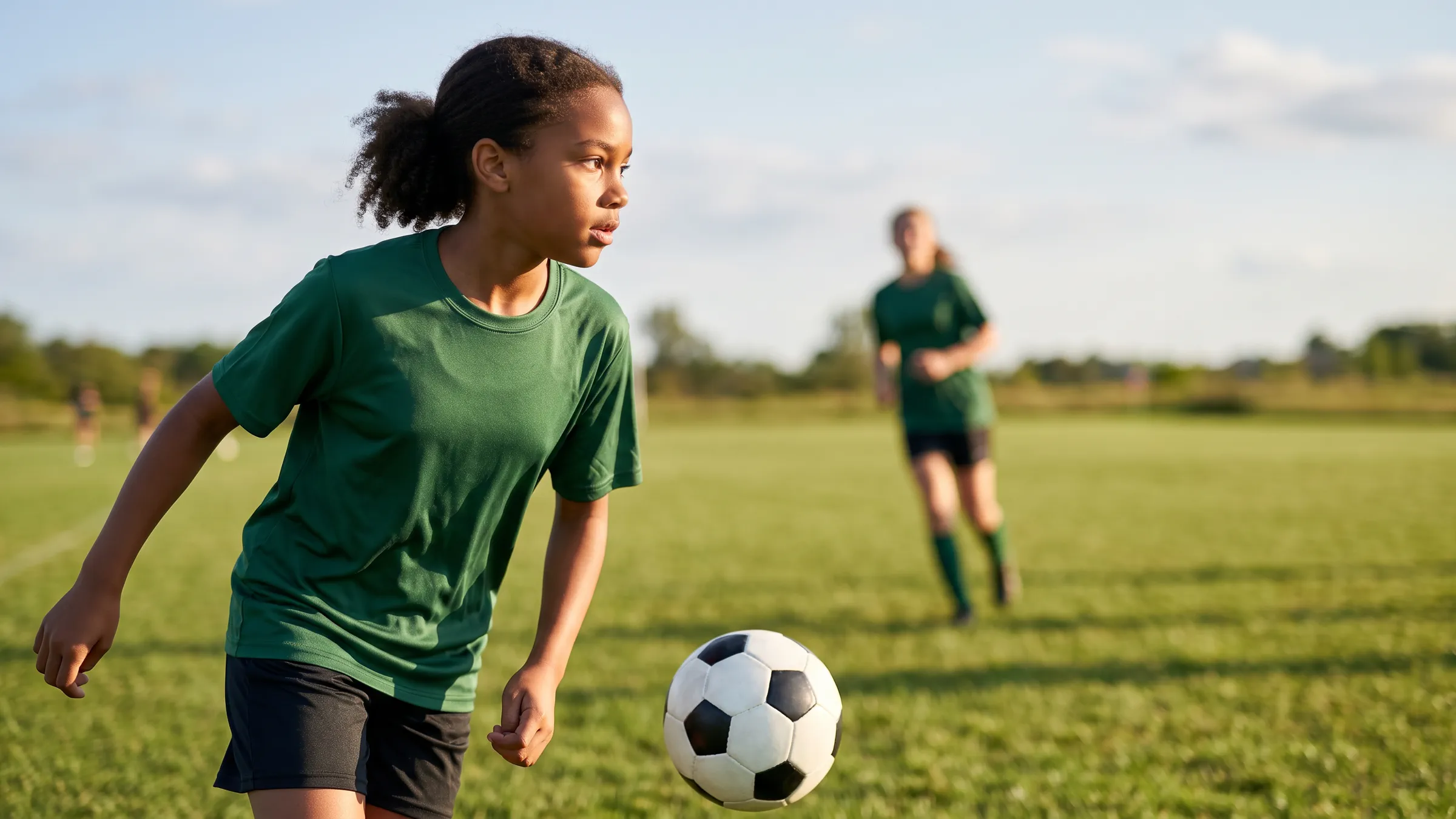
As an optometrist here in Fayetteville for over two decades, I’ve had the privilege of helping thousands of kids see the world more clearly. But there’s one story that always sticks with me. A few years ago, a young soccer player from a local Cumberland County league came into my office. He was a talented midfielder, quick on his feet, but his parents were worried. He’d recently started wearing glasses and was becoming hesitant on the field, often getting blindsided by opposing players. His glasses were limiting his peripheral vision, that crucial ability to see out of the corner of your eye, and it was affecting his confidence and his game. Have you ever wondered how much of an athlete’s success is tied to what they can see, not just in front of them, but all around them? For young athletes in dynamic sports, it’s everything. That’s why I’m so passionate about a revolutionary approach to vision correction that gives them back their full field of vision: sleepSEE® Ortho-K. It’s a game-changer, and I want to tell you why.
In This Article
- The Unseen Advantage: Why Peripheral Vision is a Game-Changer in Youth Sports
- The Downsides of Traditional Vision Correction for Young Athletes
- The Clear Winner for Young Athletes: sleepSEE® Ortho-K
- A Local Focus: Youth Sports in Fayetteville and Cumberland County
- Vision Correction Risks in Youth Sports: A Comparison
- Is Your Child a Candidate for sleepSEE® Ortho-K?
- Frequently Asked Questions (FAQs)
The Unseen Advantage: Why Peripheral Vision is a Game-Changer in Youth Sports
Peripheral vision is what allows an athlete to be aware of their entire environment without turning their head. It’s the ability to detect motion, see teammates and opponents, and react to the ever-changing dynamics of a game. In sports, what you can’t see can hurt you, both in terms of performance and safety. Think about a point guard on a basketball court at one of the Fayetteville recreation centers. They need to see the entire court to make a strategic pass to an open teammate. Or a martial arts student at a local dojo, who needs to anticipate an opponent’s attack from the side. In sports like soccer, lacrosse, and football, where the action is fast-paced and multi-directional, a wide field of vision is not just an advantage; it’s a necessity. Studies from the American Academy of Ophthalmology (AAO) have consistently shown a strong correlation between superior peripheral awareness and elite athletic performance [1]. It’s what separates the good players from the great ones.
The Downsides of Traditional Vision Correction for Young Athletes
For many young athletes, the go-to solutions for vision problems are glasses or contact lenses. While they can certainly help a child see more clearly, they come with significant drawbacks, especially for an active lifestyle.
Glasses: A Restricted View of the Field
Remember that young soccer player I mentioned? His story is all too common. Eyeglasses, by their very design, create blind spots. The frames obstruct a portion of the visual field, creating a “tunnel vision” effect. This can be incredibly dangerous in sports. A player might not see an opponent approaching from the side, leading to a collision, or miss a crucial play unfolding at the edge of their vision. Beyond the limited field of view, glasses pose a significant safety risk. A direct impact can cause them to shatter, leading to serious eye injuries. And let’s be honest, they’re just not practical for many sports. They can slip down a sweaty nose, fog up in the Fayetteville humidity, or get knocked off during a game.

This young martial artist can now train with full confidence and an unrestricted field of view, thanks to Ortho-K.
Contact Lenses: A Risky Play
Contact lenses offer a wider field of vision than glasses, but they come with their own set of problems. For a young athlete, the risk of a lens getting dislodged during a game is a constant worry. Imagine a baseball player at a dusty Fort Liberty field trying to track a fly ball, only to have a contact lens shift or fall out. It’s not just an inconvenience; it can be the difference between making the catch and letting the other team score. Furthermore, contact lenses can be a hassle to maintain, especially for kids. They require a strict hygiene routine to prevent serious eye infections, a risk that is amplified in the sweat and grime of sports. And for sports like swimming, contact lenses are a definite no-go due to the high risk of infection from waterborne bacteria.
The Clear Winner for Young Athletes: sleepSEE® Ortho-K
So, if glasses and contacts have so many drawbacks for young athletes, what’s the solution? This is where sleepSEE® Ortho-K comes in. It’s a non-surgical, reversible, and safe way to correct vision and provide myopia control, and it’s what I recommended for that young soccer player. The results were transformative.
How Ortho-K Works: A Quick Recap
Ortho-K involves wearing custom-designed rigid gas permeable contact lenses overnight. While your child sleeps, the lenses gently and safely reshape the cornea, the front surface of the eye. In the morning, they remove the lenses and can see clearly all day long without the need for glasses or contacts. It’s that simple. For a more detailed explanation, you can visit our how-it-works [blocked] page.
The Freedom of Full Peripheral Vision
The most significant advantage of Ortho-K for young athletes is the complete freedom of vision. With no glasses frames to block their view and no contact lenses to shift or fall out, they have a full, natural field of vision. They can see the entire field, court, or mat, allowing them to anticipate plays, react faster, and perform at their best. This is not just about improving their game; it’s about boosting their confidence and allowing them to play the sports they love without any visual limitations.

As you can see, Ortho-K provides the highest quality of peripheral vision, which is essential for athletic performance.
Safety First: Why Ortho-K is the Safest Choice
As a parent, your child’s safety is your top priority. When it comes to vision correction, Ortho-K is the safest option for active kids. Unlike glasses, there’s no risk of them breaking and causing an eye injury. And while contact lenses carry a risk of infection, the risk with Ortho-K is minimal when proper hygiene is followed. In fact, a study published in a peer-reviewed journal found the incidence of microbial keratitis with overnight Ortho-K to be comparable to that of other overnight contact lens modalities [2]. What about LASIK? While LASIK is a popular option for adults, it’s not recommended for children and teens whose eyes are still developing. Furthermore, LASIK involves creating a flap in the cornea, which can be at risk of displacement from a direct blow to the eye, a common occurrence in contact sports. With Ortho-K, there are no such risks.

This chart highlights the significant safety advantages of Ortho-K for young athletes compared to other vision correction methods.
A Local Focus: Youth Sports in Fayetteville and Cumberland County
Here in the Fayetteville area, we have a vibrant youth sports scene. From the Fayetteville-Cumberland Parks and Recreation leagues to the various travel teams and school sports at Fort Liberty, our kids are active and engaged. I’ve had the pleasure of working with young athletes from all over Cumberland County, helping them achieve their best vision for sports like soccer, basketball, baseball, and martial arts. Whether your child is playing for a local league or a competitive travel team, clear and unobstructed vision is key to their success and enjoyment of the game.
Vision Correction Risks in Youth Sports: A Comparison
To help you better understand the risks associated with different vision correction methods in various sports, I’ve created this comparison table:
| Sport | Glasses Risk | Soft Contacts Risk | Ortho-K Risk | LASIK Risk |
|---|---|---|---|---|
| Soccer | High (breakage, slipping) | Moderate (dislodging, debris) | Low | High (flap displacement) |
| Basketball | High (breakage, contact) | Moderate (dislodging, sweat) | Low | High (flap displacement) |
| Martial Arts | Very High (breakage, injury) | High (dislodging, impact) | Low | Very High (flap displacement) |
| Swimming | Not practical | Very High (infection) | Low (with goggles) | Moderate (infection) |
| Baseball/Softball | Moderate (slipping, dust) | Moderate (dust, drying) | Low | High (flap displacement) |
Is Your Child a Candidate for sleepSEE® Ortho-K?
If your child is active in sports and struggling with glasses or contact lenses, sleepSEE® Ortho-K could be the answer. It’s a safe and effective way to give them the clear vision and freedom they need to excel. The best way to find out if your child is a candidate is to schedule a consultation. We’ll perform a comprehensive eye exam and discuss your child’s specific needs and lifestyle. You can also take our online candidacy-quiz [blocked] to get a preliminary idea.
At sleepSEE®, we believe that every child deserves to see their full potential, both on and off the field. That’s why we’re committed to providing the best in myopia control and vision correction. sleepSEE® myopia control is a specialty service not covered by insurance. Flexible payment options and HSA/FSA funds are accepted.
Frequently Asked Questions (FAQs)
Is Ortho-K safe for kids?
Yes, Ortho-K is very safe for children. The process is non-invasive and reversible. The primary risk is infection, which is minimized with proper lens care and hygiene. Numerous studies have demonstrated the safety and efficacy of Ortho-K for myopia control in children [3].
What is the difference between myopia control and myopia management?
While the terms are often used interchangeably, “myopia control” is the more accurate term for what we do. “Myopia management” can imply simply managing the symptoms of myopia, whereas “myopia control” refers to the proactive measures we take to slow down the progression of nearsightedness. Our goal is not just to help your child see clearly now, but to protect their eye health for the future.
How long does it take to see results with Ortho-K?
Many patients experience a significant improvement in their vision after just one night of wearing the lenses. It can take up to two weeks to achieve full, stable vision correction. During this time, we will monitor your child’s progress closely to ensure the best possible outcome.
Can my child still play sports during the initial treatment period?
Yes, your child can continue to participate in sports during the initial treatment period. We may provide temporary soft contact lenses to wear during the day until their vision is fully corrected.
Where can I find a sleepSEE® provider?
You can find a list of qualified sleepSEE® providers on our find-a-provider [blocked] page. If you’re in the Fayetteville, NC area, I would be happy to see you at my clinic.
Last reviewed: February 2026
References:
[1] American Academy of Ophthalmology. “Sports Vision.” https://www.aao.org/eye-health/tips-prevention/sports-vision
[2] Bullimore, M. A., Sinnott, L. T., & Jones-Jordan, L. A. (2013). The risk of microbial keratitis with overnight corneal reshaping lenses. Optometry and Vision Science, 90(9), 937–944. https://www.ncbi.nlm.nih.gov/pmc/articles/PMC3756035/
[3] National Institutes of Health. “Orthokeratology for Myopia Control.” https://www.nei.nih.gov/learn-about-eye-health/eye-conditions-and-diseases/myopia-nearsightedness/orthokeratology-myopia-control
For more articles on vision and eye health, visit our /blog [blocked].
Free Download: Daily Habits for Healthy Eyes
The complete checklist for protecting your vision — backed by optometric science.
- Daily habits that support healthy vision
- Screen time guidelines by age group
- Outdoor activity recommendations
- Nutrition tips for eye health
Daily Habits for Healthy Eyes
Lifestyle Guide — Free Checklist
sleepSEE Clinical Team
The sleepSEE Clinical Team is a group of licensed eye care professionals dedicated to evidence-based education on myopia control, orthokeratology, and nonsurgical vision correction.