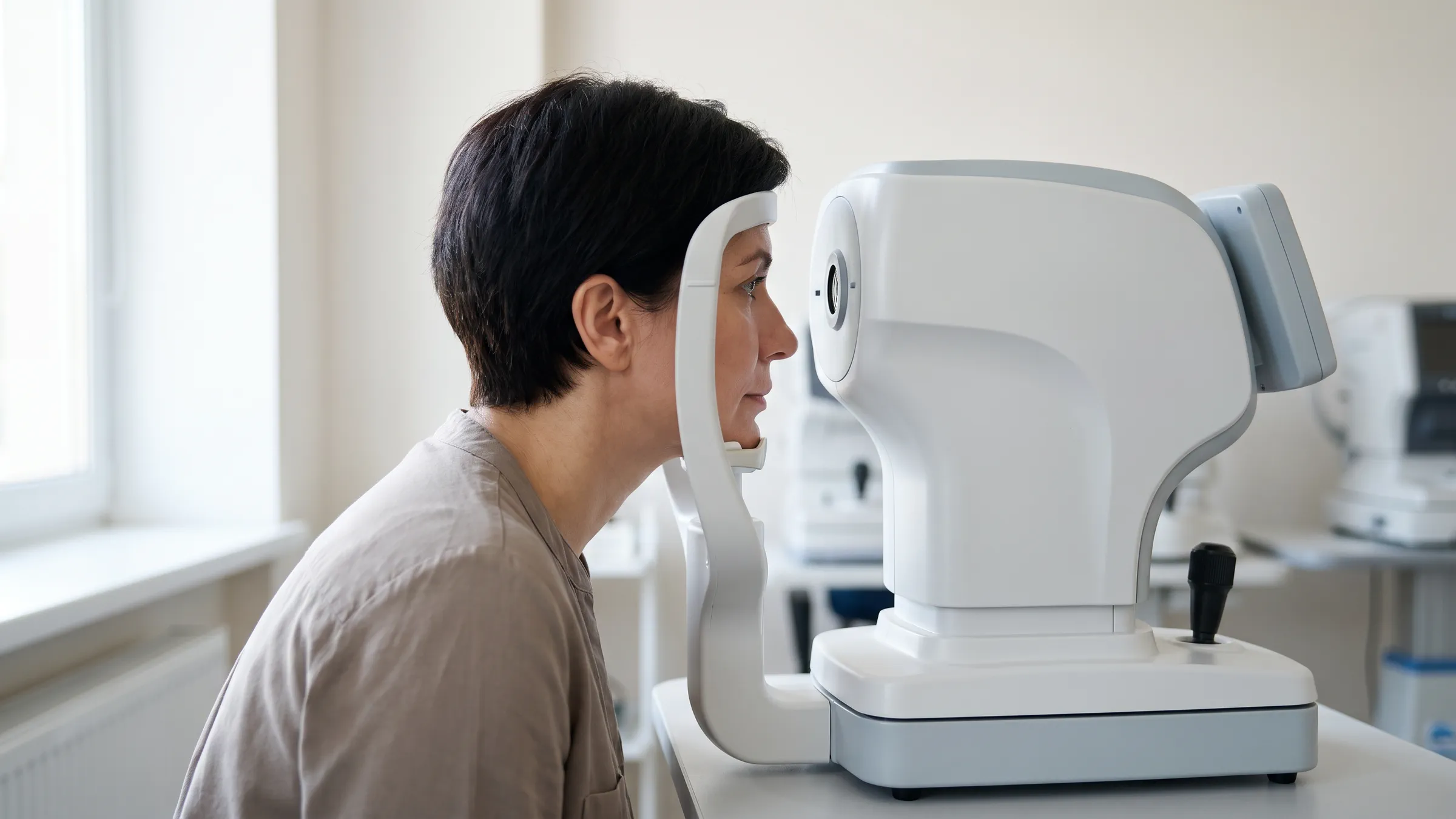
Corneal topography is a map of the front surface of your eye. The cornea is the clear front part of the eye. Its shape affects how light comes into focus. A map helps the eye doctor plan an Ortho-K lens fit and check changes after wear.
A map is one part of the exam. Your prescription, eye health, tear film and ability to care for lenses also matter. A map alone cannot tell you that Ortho-K is right for you.
Your Corneal Topography Appointment: What to Expect
You rest your chin on a support and look at a light or target. The scan takes images of the eye. The doctor may repeat it to get a clear, useful map. Follow any advice about leaving current contact lenses out before the visit.
Some devices use rings of reflected light to map the front surface. Corneal tomography can add information about the front and back surfaces and corneal thickness. Your provider will explain which tests you need.
The map uses colors to show differences in shape. Do not judge a scan by one red or blue area. The meaning depends on the type of map, its scale and the rest of the exam.
Follow the staff's directions about blinking and looking at the target. A poor image may need to be repeated before it is useful. Ask for instructions about current lenses before the appointment; taking them out only when you arrive may not be the plan the doctor needs. Do not choose your own break from prescribed wear.
Key Measurements That Guide Your Custom Lens Design
| Term you may hear | What it means |
|---|---|
| Curvature | How steep or flat the eye's front surface is. |
| Astigmatism | A difference in the curve that can affect focus and lens fit. |
| Eccentricity | How the curve changes from the center toward the edge. |
| Treatment area | The area whose shape has changed after lens wear. |
The doctor uses these findings to choose and adjust the lens. Follow-up maps help show whether the lens effect is centered and how the eye has changed. Clear daytime vision is one goal; a healthy eye surface matters too.
Think of a terrain map. It shows how a surface changes across an area, not just one height at one spot. Eye maps also show patterns, but the colors must be read with the map's scale. Red is not automatically “disease,” and blue is not automatically “healthy.”
You may hear “K readings.” These describe corneal curvature. A map adds detail about how that curve changes across the surface. Thickness is a different measurement and needs a test designed to measure it. Ask which map the doctor is showing you and what question it answers.
How Corneal Shape Affects Ortho-K Success
Eyes do not all have the same shape. Some need a different lens design or more fitting visits. Other findings may call for a different type of care.
| Finding | What the doctor may need to assess |
|---|---|
| Uneven curvature | Whether a special lens design could give a stable fit. |
| A treatment area away from the center | Whether the fit or wear plan needs to change. |
| Signs of corneal disease | Whether further tests or referral are needed before any vision plan. |
| Changes after LASIK or PRK | Whether a provider with post-surgical lens experience can help. |
Keratoconus is a disease that can make the cornea thin and change shape. It needs its own assessment and care. It is not a reason to start routine Ortho-K. If you have had eye surgery, see a provider for an exam rather than relying on a general online screener.
FAQs
Does the scan touch my eye?
Corneal mapping is generally a scan taken without touching the eye. Other tests at the same visit may work differently. Ask the staff to explain each step.
Does a good map guarantee clear vision?
No. Lens fit, prescription, eye health and the wear routine all affect the result. Follow-up visits let the doctor check the response and adjust the plan.
Will I need more than one scan?
Yes. Maps before and after wear help the doctor compare the eye's shape and guide care. Your provider sets the follow-up schedule.
Is mapping included in the fee?
Ask your provider what the fee covers, which visits are included and how later care is billed. Fees and coverage vary. See sleepSEE costs and payment details for the founding location's published example.
Ortho-K has a temporary effect and needs continued prescribed wear. Like other contact lenses, it can cause serious eye problems, including infection. Learn the warning signs and follow the care plan. FDA: contact lens types, FDA: contact lens risks
Free Download: The Science Behind Ortho-K
Read what studies found about Ortho-K and eye growth.
- Learn what 12 studies found.
- See how eye growth changed with care.
- Compare lenses and eye drops.
- Learn about FDA approvals and safety.

Ortho-K Research Summary
Science & Evidence: Free PDF
Dr. James Singletary, OD, FIAOMC
Dr. James Singletary is a licensed eye doctor. His main field is Ortho-K. He helps people see clearly without surgery. He also cares for children to help slow myopia, or nearsightedness. He created the sleepSEE Ortho-K program.
Medical Disclaimer
This article helps you learn about eye care. It is not personal medical advice, a diagnosis or a treatment plan. Ask a qualified eye doctor about your eyes and care. Do not use this page in place of that advice.