2026 Ortho-K price guide
How Much Do
Ortho-K Lenses Cost?
Orthokeratology (Ortho-K) uses custom overnight contact lensesto help you see clearly without surgery. Compare sleepSEE program fees and five-year costs.
Near Fayetteville? See the local evaluation optionLast reviewed: July 24, 2026 · Medically reviewed by James H. Singletary, OD, FIAOMC

01 · Programs & comparison
Three programs. Clear pricing.
The prices are for separate services. Nonsurgical Vision Correction is for adults and children who do not need myopia control. Choose your service to compare five years of vision costs.
Your program includes
- First-year visits and eye checks.
- Lens remakes in the first 30 days of fitting.
Your program includes
- First-year Myopia Control care.
- Eye-length checks twice a year.
- Maps of the cornea, the clear front of the eye.
Your program includes
- Adult eye exam and lens fitting.
- Checks of the LASIK flap.
- Follow-up care.
$93
Comprehensive evaluation
Credited toward enrollment.
$245/ lens
Replacement lens
A full pair is bought every 2 years.
Your comparison starts with your goal.
Select one of the three programs above to see its five-year cost breakdown.
Showing Nonsurgical Vision Correction inclusions and five-year comparison.
Five-year program & purchase subtotals
Both eyes · USDExams and later care cost extra. You can change the sample prices for glasses and contacts.
| Vision option | Year 1 | Year 2 | Year 3 | Year 4 | Year 5 | 5-year subtotal |
|---|---|---|---|---|---|---|
| sleepSEE®Nonsurgical Vision Correction | $2,400 | $0 | $490 | $0 | $490 | $3,380 |
| Prescription glassesFrames or replacement prescription lenses3 purchases × $300 · every 2 years | $300 | $0 | $300 | $0 | $300 | $900 |
| Daily disposable contactsBoth eyes · daily wear | $720 | $720 | $720 | $720 | $720 | $3,600 |
| Reusable daytime contactsBoth eyes · prescribed replacement schedule | $300 | $300 | $300 | $300 | $300 | $1,500 |
Scroll across the chart to see every year →
$0 means no scheduled program or eyewear purchase that year; ongoing care and supplies still apply. Replacement sleepSEE lenses are $245 each, with one pair ($490) in years 3 and 5.
Use your own glasses & contact costs
Enter prices before insurance or rebates. These example budgets are not national averages. Use the lens-only price if keeping your frames. Your changes update the chart above.
Your five-year purchase budgets: glasses $900, daily contacts $3,600, reusable contacts $1,500.
What else goes into your budget?
Compare this program with glasses and daytime contacts over five years. The glasses example starts with a new pair every two years; adjust it to match your spending.
- sleepSEE®
- Follow-up visits in years 2–5, lens-care supplies and any extra replacements.
- Prescription glasses
- Eye exams, additional pairs, upgrades and repairs outside your entered pair price.
- Daily disposable contacts
- Eye exams, contact-lens fittings and backup glasses.
- Reusable daytime contacts
- Eye exams, fittings, cleaning solution, cases and backup glasses.
The $93 exam fee is credited if you enroll. We do not add it twice. These are founding-office fees. The chart leaves out insurance, rebates, loan costs and price rises. It is not the full five-year care cost.
Showing Myopia Control / Management inclusions and five-year comparison.
Five-year program & purchase subtotals
Both eyes · USDExams and later care cost extra. You can change the sample prices for glasses and contacts.
| Vision option | Year 1 | Year 2 | Year 3 | Year 4 | Year 5 | 5-year subtotal |
|---|---|---|---|---|---|---|
| sleepSEE®Myopia Control / Management | $2,750 | $0 | $490 | $0 | $490 | $3,730 |
| Prescription glassesFrames or replacement prescription lensesMyopia Progression Diagnosis | $600 | $600 | $600 | $600 | $600 | $3,000 |
| Daily disposable contactsBoth eyes · daily wear | $720 | $720 | $720 | $720 | $720 | $3,600 |
| Reusable daytime contactsBoth eyes · prescribed replacement schedule | $300 | $300 | $300 | $300 | $300 | $1,500 |
Scroll across the chart to see every year →
$0 means no scheduled program or eyewear purchase that year; ongoing care and supplies still apply. Replacement sleepSEE lenses are $245 each, with one pair ($490) in years 3 and 5.
Use your own glasses & contact costs
Enter prices before insurance or rebates. These example budgets are not national averages. Use the lens-only price if keeping your frames. Your changes update the chart above.
Your five-year purchase budgets: glasses $3,000, daily contacts $3,600, reusable contacts $1,500.
What else goes into your budget?
This example buys new glasses lenses every six months. Change it to match your needs. Ordinary glasses and contacts clear blur. The sleepSEE program also tracks worsening myopia.
- sleepSEE®
- Follow-up visits in years 2–5, lens-care supplies and any extra replacements.
- Prescription glasses
- Eye exams, additional pairs, upgrades and repairs outside your entered pair price.
- Daily disposable contacts
- Eye exams, contact-lens fittings and backup glasses.
- Reusable daytime contacts
- Eye exams, fittings, cleaning solution, cases and backup glasses.
The $93 exam fee is credited if you enroll. We do not add it twice. These are founding-office fees. The chart leaves out insurance, rebates, loan costs and price rises. It is not the full five-year care cost.
Showing Post-LASIK/PRK inclusions and five-year comparison.
Five-year program & purchase subtotals
Both eyes · USDExams and later care cost extra. You can change the sample prices for glasses and contacts.
| Vision option | Year 1 | Year 2 | Year 3 | Year 4 | Year 5 | 5-year subtotal |
|---|---|---|---|---|---|---|
| sleepSEE®Post-LASIK/PRK | $2,950 | $0 | $490 | $0 | $490 | $3,930 |
| Prescription glassesFrames or replacement prescription lenses3 purchases × $300 · every 2 years | $300 | $0 | $300 | $0 | $300 | $900 |
| Daily disposable contactsBoth eyes · daily wear | $720 | $720 | $720 | $720 | $720 | $3,600 |
| Reusable daytime contactsBoth eyes · prescribed replacement schedule | $300 | $300 | $300 | $300 | $300 | $1,500 |
Scroll across the chart to see every year →
$0 means no scheduled program or eyewear purchase that year; ongoing care and supplies still apply. Replacement sleepSEE lenses are $245 each, with one pair ($490) in years 3 and 5.
Use your own glasses & contact costs
Enter prices before insurance or rebates. These example budgets are not national averages. Use the lens-only price if keeping your frames. Your changes update the chart above.
Your five-year purchase budgets: glasses $900, daily contacts $3,600, reusable contacts $1,500.
What else goes into your budget?
Compare this program with eyewear purchases after LASIK or PRK. The glasses example starts with a new pair every two years. Your doctor will assess the care you need.
- sleepSEE®
- Follow-up visits in years 2–5, lens-care supplies and any extra replacements.
- Prescription glasses
- Eye exams, additional pairs, upgrades and repairs outside your entered pair price.
- Daily disposable contacts
- Eye exams, contact-lens fittings and backup glasses.
- Reusable daytime contacts
- Eye exams, fittings, cleaning solution, cases and backup glasses.
The $93 exam fee is credited if you enroll. We do not add it twice. These are founding-office fees. The chart leaves out insurance, rebates, loan costs and price rises. It is not the full five-year care cost.
02 · Planning your care
Payment options & our promise
Ways to pay
- Cash
- Visa & Mastercard
- HSA/FSA funds for eligible expenses
- CareCredit (opens in a new tab) financing available
sleepSEE is a private-pay program. Insurance and TRICARE are not accepted for program fees.
30-Day Satisfaction Promise
50%
Refund of your program fee after the $93 evaluation fee is deducted.
If you cannot achieve satisfactory vision, ask for the refund within 30 days of your lens insertion-and-removal (I&R) training.
You must complete I&R training within 60 days of paying your program fee.
Refund details & example
If satisfactory vision cannot be achieved, you may request a refund within 30 days of your insertion-and-removal (I&R) training. The refund is 50% of the program fee after the $93 evaluation fee is deducted. That is $1,153.50 on the $2,400 Nonsurgical Vision Correction program.
You must complete I&R training within 60 days of paying your program fee. If you do not, the promise is void. The full amount, including the program fee and evaluation fee, becomes non-refundable.
Satisfactory vision is determined by clinical evaluation with your doctor.
Read the full terms03 · The details
Understand what you’re paying for

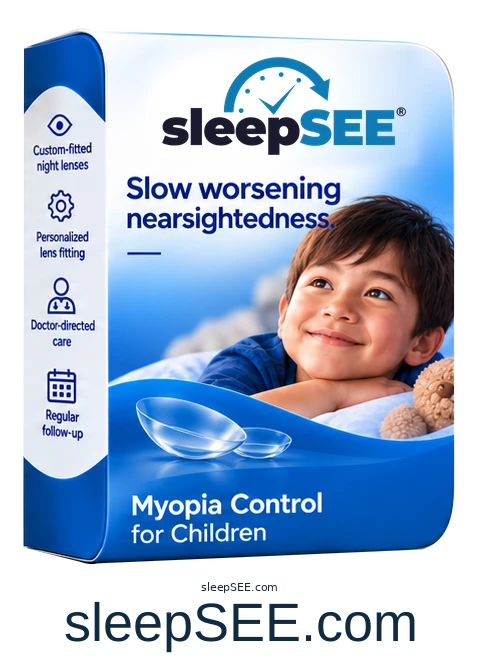
What the Myopia Control program includes
Custom lens design and fitting
Lenses based on your child’s eye measurements. The fee includes fitting visits and needed lens remakes during the first 30 days of fitting.
Eye-length checks twice a year
Tracks eye length over time. This helps show whether myopia is getting worse.
Prescription checks twice a year
A refraction checks the glasses prescription. Dated repeat checks show how fast it changes. The doctor reads that trend alongside your child’s age and eye-length measurements. These tests answer different questions: how the eye focuses and how it grows.
Checks of focus and how the eyes work together
Checks focus and how both eyes work together. The doctor assesses any problems and explains whether they need separate care.
First-year program visits and follow-ups
Why Ortho-K costs vary between providers
- Prescription complexity
- Some eyes need more work to fit. Ask how your prescription and eye shape affect the price.
- Fitting and follow-up visits
- Your lenses may need adjustments during fitting. Check which fitting visits are included in the fee.
- What is bundled
- Some fees include a year of care. Others charge for visits, tests or new lenses on their own.
- Lens remakes
- Ask whether changes to the lens design during fitting cost extra.
- Clinical technology
- A corneal map shows the shape of the eye’s clear front surface. For children, the doctor may also measure eye length to track growth.
- Provider and region
- Prices differ between practices. Compare what the fee includes, the time involved and the provider’s experience.
What to ask when comparing program fees
Ask for a written list of what is included and what is billed separately:
- The first eye exam and maps of the eye.
- Lenses fitted to your eyes.
- Fitting and eye checks for the stated time.
- New lenses if the design needs a change.
- Later eye checks and any extra test fees.
Why myopia can progress
Myopia means nearsightedness, or blurry distance vision. It can get worse as a child grows. Family history, age, close-up work and time outdoors may all matter. An eye doctor can track these changes.
Frequently asked questions
Ortho-K cost questions
How much do Ortho-K lenses cost in the first year?
At the founding location, the $93 eye exam fee is credited if you enroll. The first-year prices are $2,400 for Nonsurgical Vision Correction (both eyes), $2,750 for Myopia Control / Management, and $2,950 for Post-LASIK/PRK. Nonsurgical Vision Correction is for adults and children who do not need myopia control. These are separate services. Replacement lenses are $245 per lens. Other providers set their own fees.
How long do sleepSEE lenses last?
At the founding location, a full lens pair is bought every two years. Damage or a change in fit may mean replacing a lens sooner. Ask your provider about your plan.
Do I have to pay the full program fee again after two years?
No. At the founding location, the annual exam after year one is $149. A full lens pair costs $490 and is bought every two years. One lens costs $245 if needed. Care supplies and services outside the program cost extra. Ask your provider for a written fee list.
Does insurance cover sleepSEE Ortho-K?
At the founding location, program fees are private pay. Insurance and TRICARE are not accepted for those fees. Ask about eligible HSA/FSA funds and financing. Other providers may have different payment options.
Is financing available?
The founding location offers financing through CareCredit. You must qualify for credit. Check the rates and terms before applying.
What if I am not an Ortho-K candidate?
The eye exam checks your vision, eye health and eye shape. The doctor also asks about your daily routine. If Ortho-K is not a fit, ask which other choices may help.
What happens if we don't do anything?
Myopia often gets worse while a child's eyes are growing. Higher myopia is linked to a greater chance of some eye problems later in life. The retina, the layer at the back of the eye, may pull loose. This is called retinal detachment. The macula, the center of the retina, may change. Other risks include glaucoma, which can harm the nerve for sight, and cataract, a cloudy lens inside the eye.
That link doesn't mean any one child will develop these problems, and myopia by itself rarely causes blindness. We'd rather you look into it yourself than take our word for it. These are good places to start:
Ready to explore sleepSEE?
Talk with a sleepSEE provider about your eyes, the program that fits your needs and what it costs.