Small lenses. Two care goals.
How does Ortho-K help?
sleepSEE uses overnight Ortho-K lenses. Ortho-K stands for orthokeratology. The lenses gently change the shape of the cornea, the clear front of the eye.
Clear sight in the day
The shape change is temporary. Ongoing lens wear keeps the vision effect.
Help to slow myopia
Ortho-K can slow eye growth in children. Results vary, so the doctor tracks progress.
The sleepSEE overnight lens routine
Three steps. One daily routine.
- 01
Before bed
Wash and dry hands. Put in clean lenses as your doctor shows you.
- 02
During sleep
Wear the fitted lenses for the overnight hours your doctor prescribes.
- 03
In the morning
Remove and clean the lenses. Check that sight feels right for the day.
Follow your doctor’s plan. Backup glasses may still be needed.
Start with your child
Could this fit your family?
Ortho-K is one way to manage myopia. It is not right for every child.
Your child’s eyes
The doctor checks eye health, lens needs and how the eyes are growing.
Your family’s routine
Safe lens care, adult support and enough sleep all matter.
Ongoing eye checks
Clear sight does not mean eye growth has stopped. Keep follow-up visits.
Care comes first
Safe wear is part of every day.
Ortho-K lenses can cause eye infections. Sleeping in lenses adds risk. In rare cases, an infection can cause lasting harm to sight.
Clean hands. No water.
Use the prescribed cleaning system. Keep lenses and cases away from water and saliva.
Follow the lens plan.
Only sleep in lenses prescribed for that use. Keep eye checks even when sight is clear.
More about lens care and risks
What are the risks of overnight Ortho-K?
Ortho-K lenses can cause eye infections. In rare cases, an infection can cause lasting harm to sight. Sleeping in lenses adds risk. Only sleep in lenses made for that use and prescribed by your doctor. Safe lens care and eye checks are needed even when your child sees well.
- Wash and dry hands before lens care. Use the cleaning system your doctor prescribes.
- Keep lenses and cases away from tap water, pools and showers. Do not use saliva.
- Keep follow-up visits even when sight is clear. Tell the doctor about missed wear or cleaning problems.
- Ask who to call after hours and which symptoms need urgent care.
FDA advice on contact lenses for children explains the risks. Read our Ortho-K safety guide for more detail.
A next step, at your pace
Begin with a conversation.
Learn whether overnight lenses could fit your child’s eyes and your family’s routine.
Find a sleepSEE provider Explore costs and payment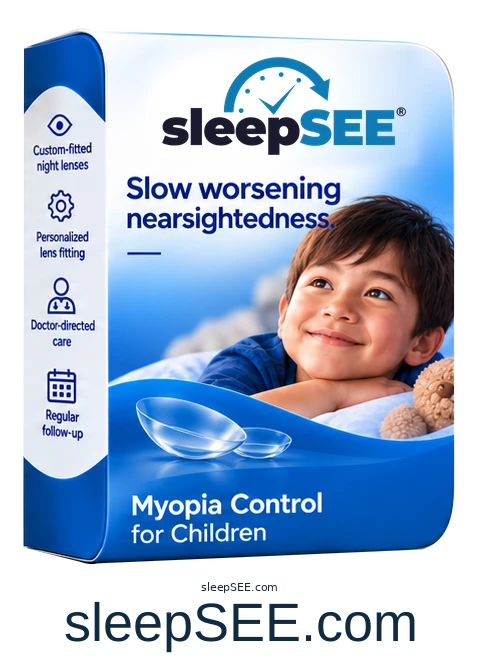
More when you need it
Your questions, in more detail.
Open a topic to explore the full parent guide.
Jump to a specific question
Understanding your child’s myopia
Why does my child keep needing stronger glasses?
Myopia means nearsightedness. Things far away look blurry. Myopia often starts while a child is growing. As the eye grows longer, your child may need stronger lenses to see well. Family history and daily habits can play a role too.
Glasses show how much help your child needs to see clearly today. Myopia control asks a second question: how fast are their eyes changing over time?
The arrow shows eye length.
The arrow shows eye length.
When an eye grows longer from front to back, this is called axial elongation. With myopia, extra eye growth can make far-away things look blurry.
- Clear distance focusLight focuses on the retina, the light-sensitive layer at the back of the eye.
- A myopic eyeThe eye is too long for its focusing power. Light from far away focuses in front of the retina.
- As the eye grows longerThat gap can grow. A stronger prescription may be needed to bring distance into focus.
Simple teaching diagram; not to scale or a picture of your child's eyes. sleepSEE.com
What is myopia control?
Myopia control is care that aims to slow changes in a child's eyes. The goal is to slow how fast their myopia gets worse. The full care plan is called myopia management. It includes clear sight, eye health checks, treatment and follow-up visits.
Standard glasses clear up blur. Myopia-control care has a second goal: to slow changes in the eyes. There is no cure for myopia. No care plan can promise that eye growth will stop. The doctor sets goals for your child and checks the plan over time. Read the IMI definitions.
The eye exam and progress checks
How do doctors measure change?
1. The glasses prescription
This test is called refraction. It measures the lens power needed to see clearly. Drops may be used to relax the eye's focusing muscles for a more useful reading.
Teaching example: −1.00 D, then −1.75 D, then −2.25 D at yearly checks. D means diopters, a unit of lens power. More minus power means more myopia. This is not a forecast or a treatment result.
2. The eye's length
Axial length is the front-to-back length of the eye, measured in millimeters. Like a height chart, repeat readings help show a pattern of growth.
One reading alone cannot show how fast an eye is growing. Ask whether your practice measures eye length and how it uses the results.
Both measures help the doctor understand change. Eye health, age and the treatment in use matter too. Learn more about axial length and myopia.
Check clear sight
How well can your child see? Does the lens power need to change?
Check eye growth
How long is each eye? How has that length changed since the last check?
Clear sight does not show that eye growth has slowed. Ask how your doctor checks both. Teaching pictures; not actual test results.
How do we know treatment is working?
Clear sight does not mean eye growth has stopped. The doctor checks sight, lens power, eye growth and eye health. Your child should feel at ease with the plan. The doctor also asks if your family can follow each step.
Ortho-K changes the shape of the cornea for a short time. The cornea is the clear front of the eye. This shape change affects lens power readings. Ask how the doctor uses eye-length checks and other tests to track growth. Clear sight alone does not show how much an eye has grown.
A progress record to discuss
Teaching example only. These are made-up measurements, not sleepSEE patient results or goals for your child. The visits are six months apart.
| Measure | First visit | 6 months | 12 months |
|---|---|---|---|
| Prescription | −1.50 D | −1.75 D | −2.00 D |
| Eye length | 24.00 mm | 24.10 mm | 24.20 mm |
These numbers show a change. They do not tell us if a care plan worked. Keep a record for each eye. Age, past growth, the type of test and the care used all matter. A doctor must read the results. This is not an Ortho-K lens power record.
Ask for a written follow-up plan. Checks may be about every six months, with earlier visits for fitting or concerns. Your doctor sets the timing. If growth continues, discuss fit, safe use and whether care should change. Do not stop or combine treatments on your own.
Lens fitting, readiness and daily care
How can sleepSEE Ortho-K help my child?
sleepSEE uses overnight Ortho-K lenses. A doctor fits the lenses to your child's eyes. The lenses gently change the shape of the cornea, the clear front of the eye. Your child wears them during sleep and takes them out in the morning.
Clear sight during the day
For suitable eyes, Ortho-K can give clear daytime sight without lenses worn during the day. This effect is temporary and needs ongoing lens wear. Your child may still need backup glasses.
Help to slow eye growth
Research shows that Ortho-K can slow eye growth in children with myopia. Results vary. Clear sight alone does not show that eye growth has slowed. Your doctor needs to track both sight and eye growth over time.
Ask about the exact lenses, their age and prescription limits, and their U.S. label. A use outside that label is called off-label use. Ask whether the planned use is off-label and what that means for your child.
Read the IMI research summary or see how Ortho-K works for kids.
Could Ortho-K fit my child?
Ortho-K needs a good lens fit, safe care and regular eye checks. Your child also needs enough sleep for the prescribed wear time. Discuss these six points with the doctor:
- Age: How much growth may lie ahead?
- Prescription: Does the child fit the product's lens-power limits?
- Eye health: Are the eye surface and tears healthy?
- Change over time: How fast are the prescription and eye length changing?
- Lifestyle: How will care fit school, sports, swimming and sleep?
- Daily support: Who will help with lens care and visits?
- Night: insert clean lenses as directed.
- Sleep: wear the prescribed overnight lenses.
- Morning: remove and clean them. Check that vision feels right before the day starts.
Follow your own doctor's plan for wear time, cleaning and follow-up. sleepSEE.com
When should treatment start?
Ask for an eye exam when myopia is found or lens needs change. You do not need to wait for stronger glasses to ask about care. Myopia that starts at a young age has more years to get worse. Age alone does not tell us which care will fit a child.
The doctor may advise treatment, closer checks or another step based on the exam. Ask when the next check should be. For the separate question of overnight-lens readiness, read what age a child may start Ortho-K.
Costs and questions for the doctor
What does sleepSEE Ortho-K cost?
Costs vary by lens needs, fitting and eye care office. Ask for the full cost of year one. Ask what later years will cost too. Your health or vision plan may not pay. Check with the eye care office and your plan. Ask how you can pay.
- Does the fee include exams, fitting and eye-length checks?
- Are replacement lenses, backup glasses and care supplies extra?
- What happens if a lens is lost or the treatment needs to change?
- How often will we travel for visits, and what will follow-up cost?
For sleepSEE-specific fees and what is included, use the Ortho-K cost and payment guide. Ask your own provider for a written quote.
What should I ask the eye doctor?
Bring old prescriptions, a list of medicines and questions about daily routines. Use these prompts at the visit:
- Has my child's prescription changed? Over what period?
- Can you measure eye length and explain the pattern?
- Is Ortho-K a fit for my child's eyes and routine? Why?
- What are the risks and limits of the exact product? Is its use off-label?
- What should we do each day, and who can help?
- When is the next visit, and what would make you change the plan?
- What symptoms need urgent care, and who should we call?
- What are the first-year and ongoing costs?
About sleepSEE and the evidence
Where does sleepSEE fit?
sleepSEE is a doctor-directed Ortho-K program. Custom lenses are worn during sleep and removed in the morning. For a suitable child, the goals are clear daytime sight and a plan to help slow myopia as the eyes grow.
Ortho-K temporarily changes the shape of the cornea, the clear front of the eye. This changes how light focuses. Changes in light at the edges of vision are thought to help slow eye growth. The vision effect needs ongoing lens wear.
sleepSEE is one choice. It is not right for every child. An eye exam helps the doctor decide whether Ortho-K is a safe fit. Your child's eye health, lens needs and ability to follow the care plan all matter.
See how sleepSEE works for kids, or learn what the sleepSEE program involves. A fitting may include a map of the eye surface made with a corneal topographer/tomographer. Learn what corneal mapping shows.
The online check helps you learn if Ortho-K might be a fit. It does not rate your child's myopia risk. For an exam, find a sleepSEE provider. Ask what care the doctor offers. Ask about follow-up visits before you book.
Sources and further reading
These sources explain the evidence and its limits. They do not replace advice about your child's eyes.
Parent FAQs
Can myopia be cured or stopped?
There is no cure that makes a growing myopic eye go back to its old shape. Care aims to slow change. No plan can promise to stop all eye growth. No plan can rule out every eye problem later in life.
Are ordinary glasses enough?
Standard glasses help your child see clearly. Standard glasses are not made to slow myopia. sleepSEE uses overnight Ortho-K lenses to help slow myopia in suitable children. Ask the eye doctor whether Ortho-K could fit your child.
Is Ortho-K right for every child?
No. Ortho-K is one way to manage myopia. Age, eye health, prescription, eye growth and daily habits all matter. Your family must be able to follow the lens care plan and attend eye checks. An eye doctor must assess your child before prescribing lenses.
Can outdoor time replace treatment?
Time outdoors can help lower the chance that myopia starts. Time outside and breaks from close work are good habits. A child who has myopia still needs eye checks and the care their doctor prescribes. Protect eyes and skin from the sun. Never look at the sun.
What happens if we stop Ortho-K?
Myopia may keep getting worse, and eye growth may speed up after Ortho-K stops. Ortho-K's effect on clear sight also fades when lens wear stops. Plan any change with the doctor. Ask about backup glasses and follow-up checks.
Does my child need to wear lenses forever?
The doctor checks the plan as your child grows. There is no set age when all children can safely stop care. Ortho-K lenses need to be worn to keep their effect on sight. That is true even if myopia has stopped getting worse. Ask the doctor what happens if lens wear stops.
Can a child swim while wearing contacts?
Keep contact lenses out of pools, showers and other water. Take lenses out before a swim. Ask about swim goggles with lens power if needed. Never rinse lenses or their case with tap water. Ortho-K lenses come out in the morning. Ask how well your child should see before a swim.
Is an online candidacy check an eye exam?
No. The sleepSEE check helps you start a talk about Ortho-K. It cannot tell if your child has myopia or measure eye growth. It cannot rate risk or tell if care is safe for your child. An eye doctor must check your child's eyes.