
Custom overnight Ortho-K care
sleepSEE Night Lenses
Wear them at night.
Take them out in the morning.
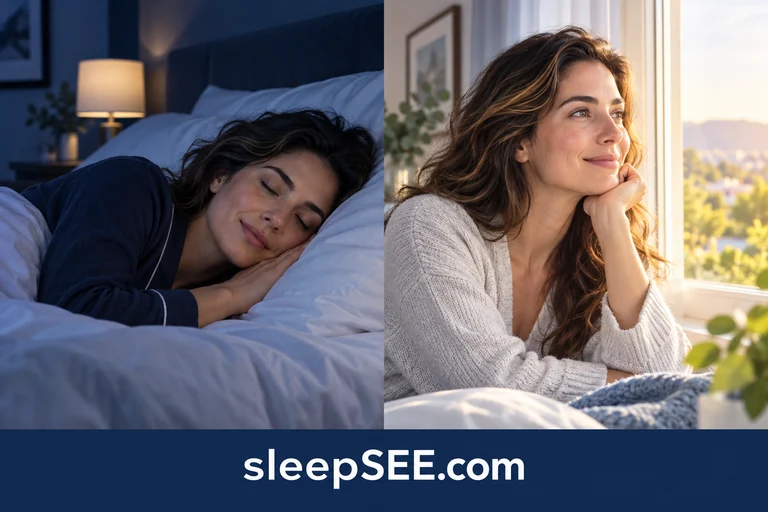
Want less to wear during the day? sleepSEE night lenses are custom Ortho-K contacts you wear while you sleep. Take them out in the morning. The goal is clearer sight with less need for glasses or daytime contacts. Your eye doctor checks the fit and guides your care.
The vision effect is temporary. Results vary. An eye exam decides whether night lenses are right for you.
Night lenses, explained
What are night lenses?
Night lenses are custom Ortho-K contact lenses you wear during sleep and take out in the morning. They change the shape of the cornea, the clear front of your eye, for a short time. This helps your eyes focus. The goal is clearer daytime sight with less need for glasses or day contacts. Results vary.
Ortho-K is short for orthokeratology. People also call these lenses night contacts, night contact lenses or overnight contact lenses. On this page, those names mean overnight Ortho-K.
Read the full Night Contacts guideFrom the first fitting to follow-up
How do night lenses work?
Start with a doctor. Build a routine. Check your progress.
- 01
Start with an eye exam
Your doctor checks your sight, eye health and eye shape. The lenses are fitted to your eyes.
- 02
Wear your lenses at night
Learn how to put in, take out and clean your lenses. Follow the sleep and wear plan your doctor gives you.
- 03
Take them out in the morning
The goal is clear sight through the day with less need for glasses or day contacts. Results vary.
- 04
Keep your eye checks
Your doctor checks your sight and lens fit. For children, the doctor also tracks how myopia changes.
The effect builds during fitting and fades if lens wear stops. Some people still need backup glasses. Your doctor sets the wear plan.
Your night-to-day routine
Before bed
Put your lenses in
Wash and dry your hands. Put in your lenses the way your doctor taught you.
While you sleep
Let the lenses work
The lenses change the shape of the cornea for a short time. Follow your doctor’s wear plan.
In the morning
Take your lenses out
Wash and dry your hands. Take out the lenses. Clean and store them as your doctor taught you.
During the day
Check your sight
Use backup glasses if needed. Your doctor checks your daytime sight and adjusts the lens fit.
Choose a routine that fits your life
Night lenses, day contacts or glasses?
These choices help you see in different ways. Your eye doctor can help you compare the fit, care and risks.
| What to compare | sleepSEE night lenses | Usual day contacts | Standard glasses |
|---|---|---|---|
| When you wear them | Wear during sleep. Take the lenses out in the morning. | Wear during the day. Take them out before sleep unless your doctor says otherwise. | Wear when you need them. Take them off to sleep. |
| During your day | The goal is less need for glasses or day contacts. Results vary. | The contacts stay in your eyes while you need them to see clearly. | The glasses stay on while you need them to see clearly. |
| How they help you see | A temporary change in the shape of the cornea helps your eyes focus. | The lenses help focus light while you wear them. | The lenses help focus light while you wear them. |
| The care you need | An eye exam, custom lens fit, lens-care training and follow-up visits. | An eye exam, a contact lens fit and the care plan for your lens type. | An eye exam, a glasses prescription and checks as your doctor advises. |
sleepSEE night lenses
- When you wear them
- Wear during sleep. Take the lenses out in the morning.
- During your day
- The goal is less need for glasses or day contacts. Results vary.
- How they help you see
- A temporary change in the shape of the cornea helps your eyes focus.
- The care you need
- An eye exam, custom lens fit, lens-care training and follow-up visits.
Usual day contacts
- When you wear them
- Wear during the day. Take them out before sleep unless your doctor says otherwise.
- During your day
- The contacts stay in your eyes while you need them to see clearly.
- How they help you see
- The lenses help focus light while you wear them.
- The care you need
- An eye exam, a contact lens fit and the care plan for your lens type.
Standard glasses
- When you wear them
- Wear when you need them. Take them off to sleep.
- During your day
- The glasses stay on while you need them to see clearly.
- How they help you see
- The lenses help focus light while you wear them.
- The care you need
- An eye exam, a glasses prescription and checks as your doctor advises.
This compares usual day contacts and standard glasses. Special myopia-control glasses and day contacts are other choices outside the sleepSEE program.
Night lenses have a temporary effect. They do not remove the need for eye care. Read the Night Contacts guide for more about lens types and safety.
Two reasons to explore sleepSEE
Could night lenses fit you or your child?
Your age, prescription, eye health and daily routine all matter. An eye exam gives the answer.
For parents
Care for a child’s myopia
Is your child’s glasses prescription getting stronger? Myopia means nearsightedness. sleepSEE uses overnight Ortho-K to help eligible children see clearly and slow how fast myopia gets worse.
Clear sight does not mean eye growth has stopped. Your doctor tracks both. Children need help with lens care and regular eye checks.
Explore sleepSEE for childrenFor adults
Less to wear during the day
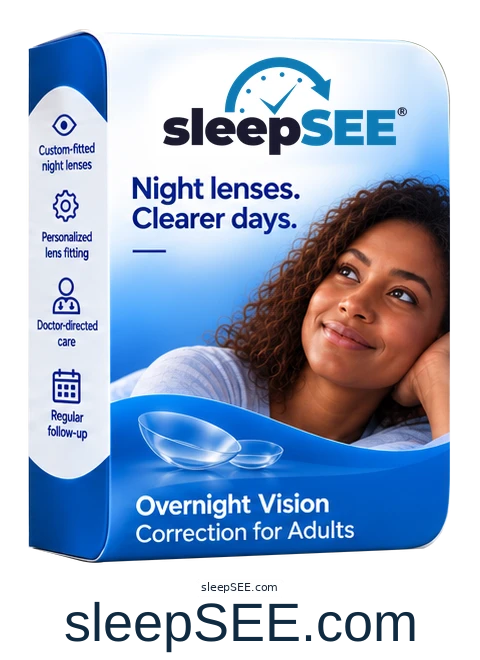
Want to rely less on glasses or day contacts? Night lenses may fit your work, sport and daily routine. The vision effect is temporary and needs ongoing lens wear.
Night lenses do not stop eye aging. You may still need reading glasses or other vision care. Ask your doctor what to expect.
Explore sleepSEE for adults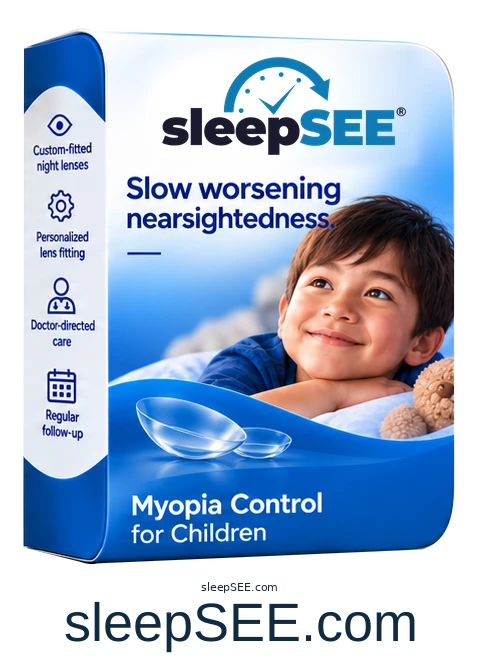
Need more help with fit? Our Ortho-K candidacy guide explains what the eye doctor checks.
Good care matters
Are night lenses safe?
Overnight contact lenses can cause infection, including serious infection and lasting harm to sight. Custom fitting, clean lenses and eye checks are part of care.
- Wash and dry your hands before touching lenses.
- Use the cleaning system your doctor gives you.
- Keep lenses away from water. Do not swim or shower in them.
- Keep follow-up visits, even when your sight seems clear.
Plan for lenses and care
How much do night lenses cost?
At sleepSEE’s founding location, first-year fees are $2,400 for Nonsurgical Vision Correction (both eyes) and $2,750 for Myopia Control / Management. These are separate services. Nonsurgical Vision Correction is for adults and children who do not need myopia control. Other providers set their own fees.
The cost covers more than the lenses. Ask about the eye exam, custom fitting, training, follow-up visits and lens replacement.
Fees and payment options can differ by provider and program. Our price guide shows sleepSEE’s published fees and what they include.
Does insurance cover night lenses?
At the founding location, program fees are private pay. Insurance and TRICARE are not accepted for those fees. Ask about eligible HSA/FSA funds and financing. Other providers may have different payment options.
See Ortho-K costs and payment optionsBefore your eye exam
Common questions about night lenses
Are night lenses the same as Ortho-K?
On this page, night lenses means overnight Ortho-K lenses. Ortho-K is short for orthokeratology. These custom lenses change the shape of the cornea, the clear front of your eye, for a short time. You wear them during sleep and take them out in the morning.
Can I sleep in my usual contact lenses?
Do not use your usual day contacts as night lenses. Only sleep in lenses that your eye doctor has prescribed for that use. Even lenses made for overnight wear carry a risk of infection. Soft lenses approved for extended wear are a different type of lens from Ortho-K.
Will I still need glasses during the day?
The goal is clear daytime vision with less need for glasses or day contacts. Results vary. You may need backup glasses as the lenses are fitted, or if the effect fades during the day. Ask your doctor what is safe for driving and other tasks.
Do I need to wear night lenses every night?
Follow the wear plan your eye doctor gives you. Many people wear their lenses each night. The effect is temporary. If you stop wearing the lenses, the cornea returns toward its old shape and your vision changes back. Ask your doctor before you change your routine.
Can sleepSEE night lenses help children?
For a child who is a good fit, sleepSEE uses overnight Ortho-K as part of myopia care. Myopia means nearsightedness, or blurry distance vision. The goal is clearer daytime sight and to slow how fast myopia gets worse. Clear sight alone does not show that eye growth has slowed. The doctor checks both over time.
Can I buy night lenses without an eye exam?
No. Night lenses need a prescription and a custom fitting. A sleepSEE provider checks your eye health, glasses prescription and corneal shape. You also need lens-care training and follow-up visits. An online candidacy check is a starting point, not a diagnosis or a lens prescription.
Ready to talk with a doctor? Find a sleepSEE provider.
Sources and page information
Learn more from the FDA: Types of contact lenses and Ortho-K (opens in a new tab) and contact lens risks (opens in a new tab).
Program information from sleepSEE. See our editorial standards. This page does not take the place of an eye exam.