Ortho-K may be right for you if you want clear vision without glasses or contacts during the day. Your doctor checks your eyes to see if the lenses can work for you. You also need time to wear and care for them. An online quiz cannot replace this eye exam.
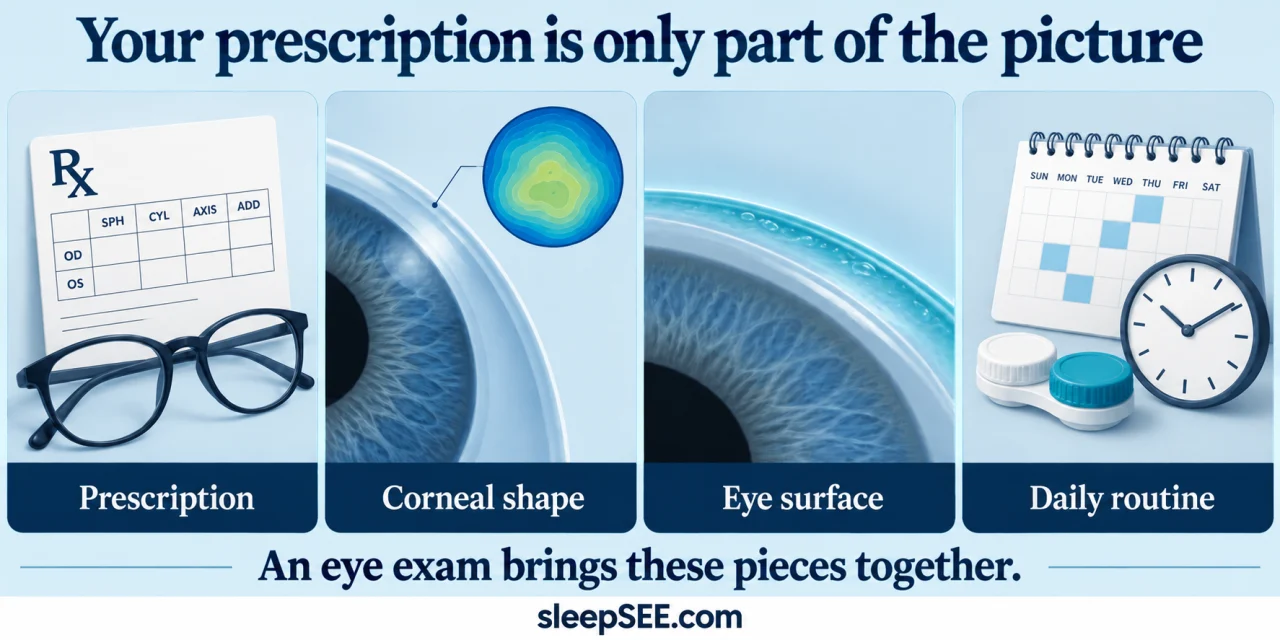 View the full-size candidacy illustration
Who may benefit from Ortho-K?
Ortho-K uses lenses made to fit your eyes. You wear them while you sleep and take them out when you wake up. They reshape the cornea, the clear front of your eye. The goal is clear vision all day without glasses or daytime contacts, mainly for people who are nearsighted. This means distant things look blurry. Keep wearing the lenses on the schedule your doctor gives you to maintain the effect. The change is not permanent: if you stop wearing the lenses, your cornea returns to its old shape and your vision goes back to the way it was. FDA: contact lens types.
Ortho-K may appeal to you if glasses get in the way at work. You may dislike daytime contacts due to dry eyes, or want an option without surgery. Think about when you most want clear vision: at the gym, during a long shift, or when you first wake up. Tell your doctor what matters to you.
Your eyes and your daily routine both matter. You need to learn how to put the lenses in, take them out, clean them, and store them. You also need to return for checkups. Read how overnight contacts work to learn more.
What makes Ortho-K a good fit?
Use this table to plan what to ask your doctor. It cannot tell you if you qualify. Your doctor checks your eyes and the lens fit before making a plan.
| What to check | A reason to ask about Ortho-K | What may need more care or a different plan |
|---|---|---|
| Your prescription | A lens can treat your level of nearsightedness | The lens cannot treat your full prescription, or your vision has changed for an unknown reason |
| Eye shape | The shape of your cornea supports a good lens fit | Scars, an unusual shape, eye disease, or past eye surgery |
| Eye health | Healthy eyes and a good tear film (the thin layer of tears over your eye) | An eye infection, swelling, significant dryness, or allergies that cause problems |
| Daily care | Time to wear and clean the lenses and come for checkups | Trouble with lens care or keeping your visits |
| Your goal | Clear daytime vision with ongoing lens wear and care | Expecting one treatment to end all future need for glasses or contacts |
Some eye problems need treatment first. Others may rule out a lens. Your doctor will explain what the exam shows. Professional fitting and management guidance, FDA: example overnight-lens patient labeling.
Is my prescription too strong? What about astigmatism?
There is no single limit for all Ortho-K lenses. Each lens design has its own approved range. Ask your doctor which lens could fit your needs and how much it could help. A number in an online ad cannot tell you that. Compare one FDA lens approval with another FDA lens approval.
Astigmatism means your eye does not focus light evenly. It does not always rule out Ortho-K. How much you have, what causes it, and your eye shape help guide the lens choice. Ask: “Can this lens treat my full prescription? Will I still need glasses for some tasks?” AOA: astigmatism.
Bring past glasses prescriptions if you have them. They help your doctor see how your vision has changed. The rules for LASIK do not apply to every person who wants Ortho-K. Care for a child's changing vision also differs from care for an adult.
Why does my doctor map my cornea?
A scan makes a map of the shape of your cornea. The tool is called a corneal topographer/tomographer. The map helps your doctor choose a lens and spot areas that need a closer look. Two people can wear similar glasses but have different eye shapes. They may need different lenses. AOA: astigmatism and corneal mapping.
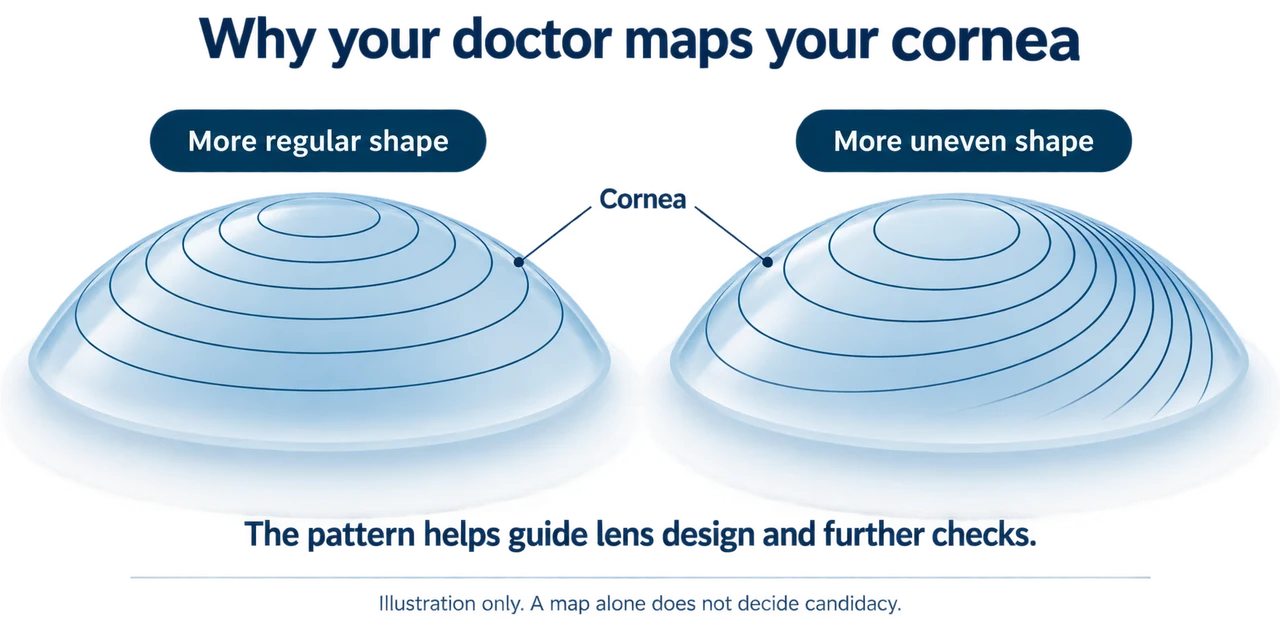 View the full-size corneal mapping illustration
These drawings are examples, not scans of real patients. You cannot use them to tell if you have an eye disease. Ask your doctor what your own map shows and what it means for your care.
A cornea that is too thin for laser surgery does not prove that Ortho-K is a good fit. An unusual map does not prove that either. If you have, or may have, a corneal disease, your doctor needs to check it before choosing a treatment. FDA: example overnight-lens patient labeling.
Does my age matter?
Your age is only one part of the decision. Your eye health and vision needs matter too. If you are over 40, ask about both distance and reading vision. Clear distance vision does not mean you will see well up close.
As we age, our eyes lose the ability to focus up close. This is called presbyopia. Ortho-K does not stop that change. LASIK and PRK do not stop it either. You may need reading glasses, contact lenses, or another way to help you see up close. No vision treatment stops your eyes from aging or guarantees you will be glasses-free for life. NEI: presbyopia.
Read Ortho-K for adults over 40 for more on these choices.
For children, care has another goal: to slow the worsening of nearsightedness while helping them see clearly. Ortho-K is one option. Ask your child's eye doctor about the research, lens care, and checkups. Start with sleepSEE for children. AAPOS: childhood myopia and treatment.
What if I have dry eyes or allergies?
Before you are fitted for Ortho-K lenses, tell your doctor about any eye symptoms. Do your eyes burn, feel gritty, or water often? Does your vision go from clear to blurry? Mention these problems even if they come and go. Your doctor can check the cause and whether you need treatment first. NEI: dry eye.
You may like the idea of taking your lenses out each morning. But your eyes still need to be healthy enough for overnight lens wear. An eye infection, swelling, severe dryness, or some allergies can make the lenses a poor choice. Your doctor may treat the problem first, check your eyes again later, or suggest another option. FDA: example overnight-lens patient labeling.
What if I have had LASIK or cannot have it?
If you were turned down for LASIK, ask why. Your prescription, dry eyes, eye shape, or a lack of tissue for more surgery may be the reason. Each needs a different plan. Being turned down for LASIK does not mean Ortho-K or another procedure is right for you.
Past eye surgery can change how a lens fits. Bring your surgery records if you have them. Look for an eye doctor who has experience with eyes like yours. Read whether you can get LASIK twice to learn what to ask. For other choices, see LASIK alternatives.
What happens at an Ortho-K eye exam?
The exam helps your doctor find out what could work for your eyes and your goals. An online quiz can help you start the conversation. It cannot test your sight, check your cornea, or prescribe lenses.
Ask which tests and services the visit includes. Your doctor may check:
- Your history and goals: past eye problems, surgery, medicines, and what you want to see clearly.
- Your vision: how well you see far away and up close, and the lens strength you need.
- Your eye shape: a map to help plan the lens fit and show what needs more checks.
- Your eye health: the front of your eye and the layer of tears over it.
- Your care plan: how to use the lenses, when to return, and what to do if a problem starts.
These are common parts of an exam. Each provider may include different tests. AOA: comprehensive eye examinations.
Can I keep up with lens care?
Think about a normal week. Can you put in and take out lenses with clean, dry hands? Keep them away from water? Clean and store them as your doctor shows you? Make time for checkups?
Good care matters. Eye infections from contact lenses can be serious. Follow the wear schedule your doctor gives you. Do not rinse or store lenses in tap water. Take them out before you swim or shower. CDC: contact lens care.
If your eyes hurt, turn red, become sensitive to light, or your vision suddenly blurs, take the lenses out. Contact your eye doctor right away. Do not keep wearing the lenses to see if the problem goes away. FDA: contact lens risks.
Read about the first week of Ortho-K. Ask when your doctor will check your progress. Also ask what to use to see clearly while your eyes and lens fit are being checked.
Questions to ask your doctor
Can an online quiz tell me I qualify?
No. It can ask about your goals and eye history. It cannot replace an eye exam or tell you which lenses to wear. Use the result to start a talk with your doctor.
What if the answer is “not yet”?
Ask why, what needs to change, and when to check again. Some eye problems need care first. Your eye shape, prescription, or trouble with lens care may mean another choice is better for you.
Will I never need glasses again?
Ortho-K aims to give you clear daytime vision without glasses or daytime contacts. Your result depends on your eyes and how they respond to the lenses. You need to keep wearing them as prescribed. They do not stop your vision from changing as you age. FDA: contact lens types, NEI: presbyopia.
What should I do next?
Find a sleepSEE provider and ask for an Ortho-K eye exam. Bring your glasses or prescription, a list of eye symptoms, and any eye-surgery records. Ask what the visit costs and what it includes before you book.
Is Ortho-K Right for Me?
Could Ortho-K fit your life? Get the free adult guide to help you plan for your eye exam.
- What your doctor checks at the Ortho-K exam
- Tips for work, reading, night driving, travel, and shift work
- Fees with or without past eye surgery, plus tools to plan your costs over five years
- What to expect in the first month, how to care for lenses, and six questions to ask
Is Ortho-K Right for Me?
8-page PDF · Fill in or print
New to Ortho-K? Read our main guide to overnight vision correction for how lenses work, costs, care, and choices.