For Adults
Overnight Vision Correction with Ortho-K
Learn how Ortho-K lenses work and who may be a fit. See care costs, benefits and risks to discuss at an eye exam.
10 min read

Explore Ortho-K and other choices besides LASIK. Learn what to ask before you choose.
Learn how Ortho-K lenses work and who may be a fit. See care costs, benefits and risks to discuss at an eye exam.

Could Ortho-K fit your eyes? Learn how an eye exam checks lens power, eye shape and health. See what safe lens care needs.
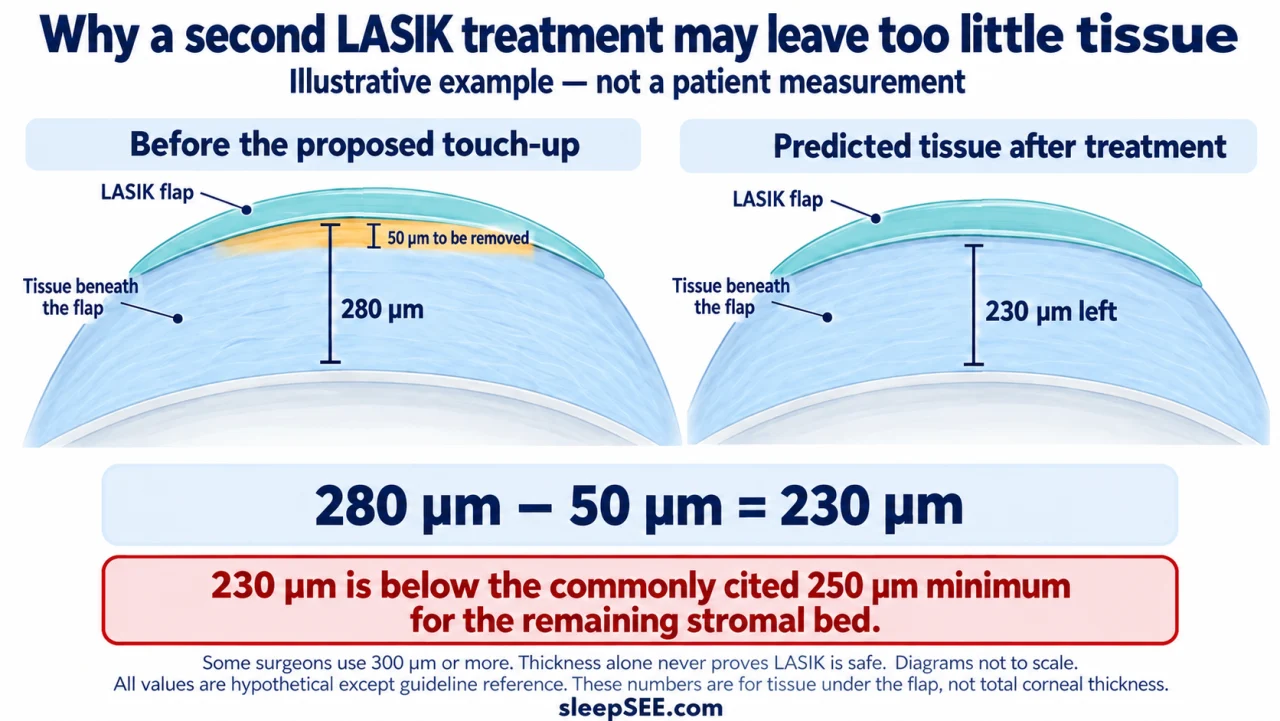
Could you have LASIK again? Learn why eye tissue and steady vision matter. Compare choices with and without surgery.

Being over 40 does not, by itself, rule out Ortho-K. Your eye health, prescription and daily needs matter more than age alone.

Long shifts can make glasses or contacts hard to manage. Masks may fog lenses.

Vision rules depend on your branch, job and stage of service. Clear sight after Ortho-K does not prove that you meet those rules.

When you stop Ortho-K, its vision-correction effect wears off. You will need a plan for glasses or other correction as your vision changes.

If your contacts leave your eyes dry, gritty or sore, ask for an eye exam before switching lenses. The cause matters.

Ortho-K may appeal to students who want clear daytime vision without daytime lenses. The work moves to a sleep-time routine: wearing, cleaning and storing the lenses, plus follow-up eye checks.

Ortho-K may suit adults who want clear daytime vision without surgery. You wear fitted lenses during sleep and take them out in the morning.

Holding a phone farther away to read it can be a sign of presbyopia. This is the age-related loss of near focus.

Ortho-K and LASIK can both reduce the need for daytime glasses or contacts. They work in different ways and need different eye exams.