Ortho-K uses custom lenses worn during sleep to change the shape of the cornea, the clear front of your eye. You take the lenses out in the morning. For people whose eyes are a good fit, the goal is clear daytime vision without glasses or daytime contacts.
This guide is for adults who want to know how it works, what care involves, and what to ask before starting. sleepSEE is a doctor-directed Ortho-K program. An eye exam helps decide if it fits your eyes and your life.
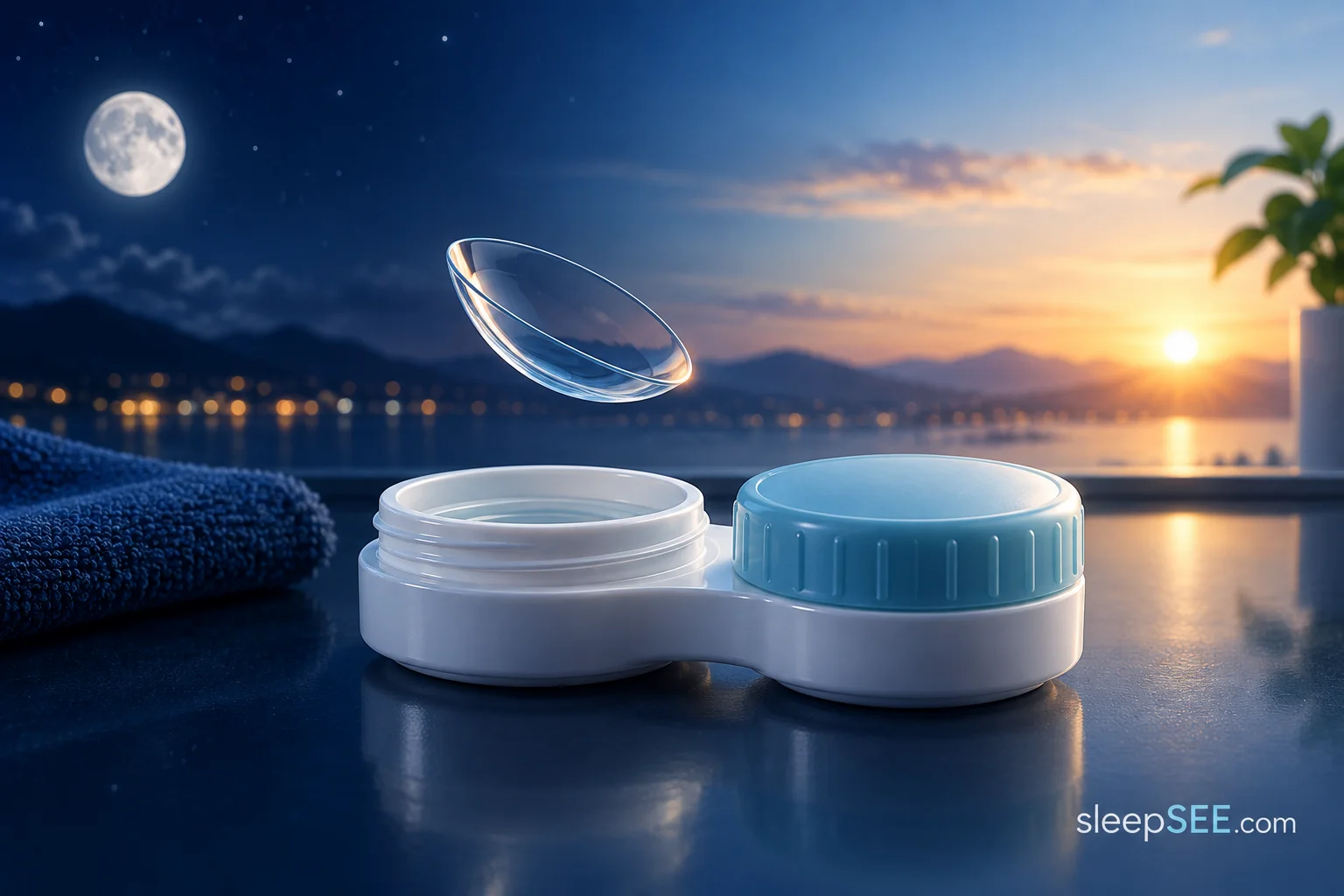 View the full-size illustration
Original illustration. Ortho-K lenses come out after sleep; your doctor checks your vision and lens fit.
Looking for help with your child's changing glasses prescription? Visit our Ortho-K and myopia care page for children. The goals and care plan differ from adult vision correction.
What is Ortho-K?
Ortho-K is short for orthokeratology. It uses firm, custom contact lenses to change how the front of your eye focuses light. These lenses let oxygen pass through. They are fitted to your eyes, rather than bought off the shelf.
The main use is to correct nearsightedness, also called myopia. With myopia, faraway things look blurred. Some people with astigmatism may also be a fit. Astigmatism means the eye's shape can blur or distort vision. The lens design, your prescription, and your eye health all matter. FDA: types of contact lenses.
You may hear the terms “corneal reshaping” or “night contacts.” Ask which lens and care plan the doctor means. Sleeping in regular contacts is not the same thing as Ortho-K. Our night contacts guide explains the difference.
How do overnight lenses work?
Light passes through the cornea before it reaches the back of the eye. Changing the cornea's front surface changes where light comes into focus. Ortho-K uses a fitted lens to make that change without cutting away tissue. The lens effect lasts after you remove the lens, but it is not permanent. CLEAR research review: Ortho-K.
- Before sleep: Put in the lenses as your doctor taught you. Use the wear schedule set for your eyes.
- During sleep: The fitted lenses change the front surface of the cornea. The goal is better focus after you take them out.
- After sleep: Remove, clean, and store the lenses as directed. Your doctor checks your daytime vision at follow-up visits.
Keep in mind the tasks you need to do well. Tell your doctor about night driving, small print, screen work, and long shifts. The plan should fit those needs, not just a vision chart in the exam room.
What happens if I stop wearing the lenses?
The change is not permanent. If you stop, the cornea returns toward its old shape and the vision correction wears off. You will need other correction as the effect ends. Ask your doctor to plan the change with you; an old pair of glasses may not suit each stage. FDA: Ortho-K and ongoing wear.
This is about the lens effect. The effect can reverse, but harm from a problem may not. “Nonsurgical” does not mean risk-free.
Who may be a good fit?
Ortho-K can appeal to adults who find glasses awkward at work or during sports, dislike daytime contacts, or want an option that does not involve surgery. These are reasons to explore it. They do not prove it is right for your eyes.
A doctor looks at more than your prescription. The exam checks the cornea's shape, the health of your eye surface, and whether you can manage lens care and follow-up visits. Bring your current glasses or contact lens prescription if you have it. See what an Ortho-K candidacy exam checks.
| Bring up at your exam | Why it matters |
|---|---|
| Your current prescription and any recent change | The doctor needs to know what correction your eyes need now. |
| Burning, grittiness, watering, or blur that comes and goes | The eye surface may need care before a lens fitting. |
| Past LASIK, PRK, injury, or corneal disease | These need an individual exam and may change the options. |
| Your sleep and work schedule | Lens wear and checkups need to fit your routine. |
| Reading, night driving, and safety eyewear | Each task can need its own plan, even if distance vision improves. |
Tell your doctor if your eyes feel dry when you wear soft contacts. sleepSEE Ortho-K lenses are worn during sleep and removed in the morning. Going without daytime lenses may ease this dryness. Your doctor will check whether Ortho-K is right for your eyes. Supporting study.
Had LASIK or PRK? Go straight to a provider for an eye exam. The online screener does not yet have a path made for eyes that have had surgery.
What if I am over 40?
Discuss close-up work as well as distance vision. As eyes age, the lens inside the eye loses its ability to focus up close. This is called presbyopia. Ortho-K, like LASIK or PRK, does not stop that change. Reading glasses or other forms of correction may be part of your plan. No vision-correction procedure stops eye aging or guarantees that you will be glasses-free for life. NEI: presbyopia.
What does getting started involve?
The fitting is a care process, not just a lens order. Ask the office to explain each stage and which visits your fee covers.
- An eye exam and corneal map. A corneal topographer/tomographer maps the front of the eye. The doctor uses the findings, your prescription, and your eye health to assess your options.
- A lens fitting and hands-on training. Learn to put the lenses in, take them out, clean them, and store them. Practice until you feel able to do the steps at home.
- Early checks and any lens changes. Your doctor checks the fit, eye surface, comfort, and vision. A lens may need adjustment. Ask when to return after your first night.
- Ongoing care. Keep the checkups in your plan. Good vision alone cannot tell you whether your eye surface is healthy.
Ask how long fitting may take for your eyes. There is no one-night or fixed-date promise in this guide. Plan for backup correction while your doctor checks the response. Do not drive if your vision is not clear enough to do so safely.
What benefits and tradeoffs should I weigh?
The main appeal is a day without lenses on your eyes. There is no surgery, and you can discuss stopping the lens routine with your doctor. For some people, that fits their goals better than a surgical option.
The tradeoff is ongoing care. You need time for lens cleaning, wear on your prescribed schedule, and visits to check your eyes. Upfront fees can be higher than for basic glasses. Compare the full care plan, not just the cost of a pair of lenses.
| Option | When it corrects vision | What to plan for |
|---|---|---|
| Glasses | While you wear them | Frames, lens updates, and task-specific pairs if needed. No contact lens wear. |
| Daytime contacts | While the lenses are on your eyes | Daily handling or disposal, eye-surface comfort, and lens checks. |
| Overnight Ortho-K | After overnight wear and lens removal | A temporary effect, lens care, follow-ups, and overnight lens risks. |
| LASIK or PRK | After surgery and healing | A separate surgical exam, tissue changes, recovery, and surgical risks. |
None of these choices stops future changes in your eyes. Ortho-K also does not replace safety glasses at work or protective eyewear for sports. For swimming, take contact lenses out and use suitable goggles. FDA: contact lenses and water.
Is Ortho-K better than LASIK?
There is no single best choice for everyone. Ortho-K changes the cornea through lens wear; LASIK removes corneal tissue through surgery. Both need a careful eye exam. Your goals, eye health, and willingness to follow a care plan matter.
Being turned down for LASIK does not, by itself, determine Ortho-K candidacy. The reason matters. A thin or unhealthy cornea is a reason for further assessment, not a reason to assume overnight lenses will work. Compare the options in our LASIK alternatives guide. If you have already had surgery, read options when considering LASIK again.
Is Ortho-K safe, and what care does it need?
Ortho-K involves sleeping in contact lenses. Serious eye infection is a real risk. An infection can cause lasting harm to vision. Careful lens care and follow-up visits help reduce risk, but they do not remove it. Other problems can include eye irritation or scratches on the eye surface. FDA: contact lens risks.
Learn the exact care steps for your lenses and solution. Do not switch products or change wear times on your own. Keep your lenses away from water, use fresh solution as directed, and follow the office's plan for cleaning and replacing the case.
Pain, unusual redness, light sensitivity, or sudden blur: remove your lenses and contact an eye doctor promptly. Do not put the lenses back in while waiting for advice. Bring your lenses and case to the visit if asked. FDA: warning signs and what to do.
For more detail, read our Ortho-K safety guide. Ask your doctor which lens is being fitted and what its approved use covers. Approval for a lens and use is not a promise of a good result for every person.
How much does Ortho-K cost?
Fees vary by office, lens needs, and what the program includes. Ask for a written quote that separates the first year from later care. An online price alone may leave out supplies, extra visits, or replacement lenses.
When comparing quotes, ask: How many fitting visits are covered? What if a lens needs changing? What happens if I stop? What will I pay in years two and three? Our Ortho-K cost guide goes into those questions in more depth.
Common questions about overnight lenses
Do Ortho-K lenses hurt?
You may notice the lenses when you first put them in. Comfort is part of the fitting check. Do not treat pain as something to push through. Remove the lenses and contact your eye doctor if they hurt.
Can I just sleep in my regular contacts?
No. Do not turn daytime lenses into overnight lenses by changing when you wear them. Only sleep in lenses prescribed for that use. Ortho-K lenses have a special design and fitting process; ordinary contacts do not provide the same effect after removal. FDA: lens types.
Why doesn't everyone choose Ortho-K?
The right choice depends on the eyes and the person. Fees, the need for a skilled fitting, lens care, and follow-up visits can affect the decision. Some people prefer glasses or daytime contacts. Others want to discuss surgery. These are tradeoffs to weigh, not a reason to promise one option is best for all.
Can children use Ortho-K too?
Yes, children can be assessed for Ortho-K. In children, care can also aim to slow worsening myopia. That is a different goal from correcting an adult's daytime blur. Start with our children's Ortho-K page to learn about that care path. CLEAR research review.
Can I take a break for travel?
Plan it with your doctor before you leave. You need a way to see as the lens effect wears off, plus a safe plan for restarting. Bring enough care supplies, a clean case, and your office's contact details. Avoid changing the routine on your own.
What should I ask at my eye exam?
Take this list with you:
- Is my prescription and corneal shape a good fit for the lens you use?
- Does my eye surface need treatment before fitting?
- What should I expect during the first few weeks, and when will you check my eyes?
- How will we check reading, work tasks, and night driving?
- What is the plan if the lenses hurt, I lose one, or I need a break?
- What does my first-year fee cover, and what will later care cost?
The next step is an eye exam, not a commitment to treatment. Use the adult candidacy check to help prepare, or find a sleepSEE provider to arrange an exam. If you have had eye surgery, use the provider route.
Is Ortho-K Right for Me?
Could Ortho-K fit your life? Get the free adult guide to help you plan for your eye exam.
- What your doctor checks at the Ortho-K exam
- Tips for work, reading, night driving, travel, and shift work
- Fees with or without past eye surgery, plus tools to plan your costs over five years
- What to expect in the first month, how to care for lenses, and six questions to ask

Is Ortho-K Right for Me?
8-page PDF · Fill in or print